
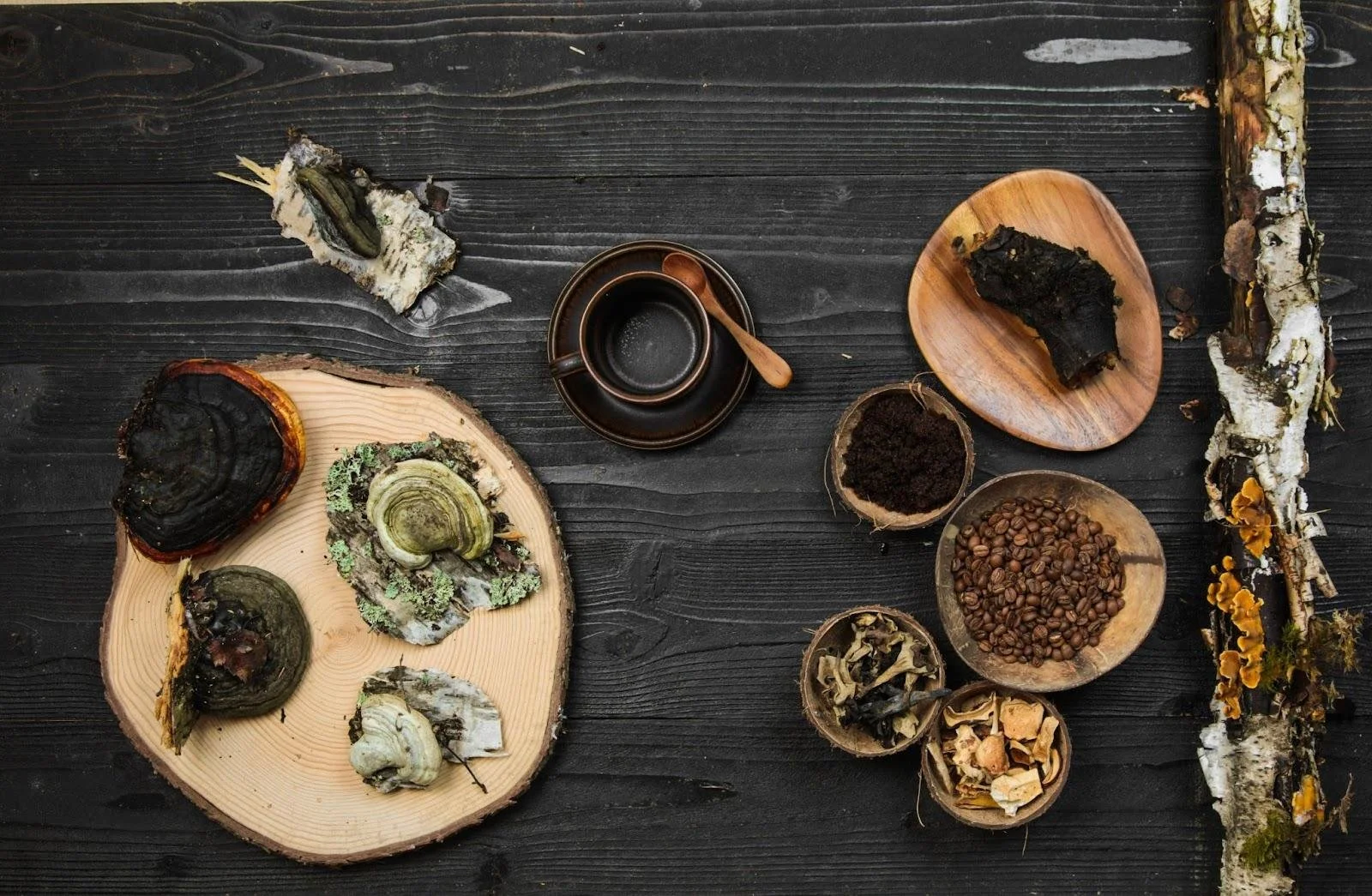
From slow-growing forest fungi to carefully prepared extracts, this collection brings together medicinal mushrooms worked with patience and respect for the landscapes they come from.
Our medicinal and adaptogenic mushrooms are wild foraged or thoughtfully sourced, then prepared in small batches using traditional methods that prioritise depth over speed. Shaped by season, environment and long-standing herbal practice, these mushroom preparations reflect a close relationship with the land - and a belief that resilience is built steadily, not rushed.
Our medicinal mushroom category focuses on wild-harvested and carefully cultivated fungi traditionally used in teas, tinctures and extracts. These include woodland species such as chaga, turkey tail and birch polypore, alongside UK-grown lion’s mane, all prepared using slow, traditional methods that respect both ecological limits and established mushroom craft.
From our hands…
…To your home

For mornings that don’t need shouting at
Some routines don’t need reinventing — just gently rebalanced.
Chaga (Inonotus obliquus) is a slow-growing forest fungus, traditionally prepared patiently and returned to regularly rather than used for quick results. Coffee, on the other hand, has always been about rhythm: the familiar pause, the smell, the warmth of a mug held between both hands.
This blend brings the two together without drama.
Wild Scottish Chaga is combined with ethically sourced ground coffee, creating a simple preparation that feels familiar while quietly shifting the tone of the ritual. The result is steady and grounding in character, with the recognisable depth of coffee softened by Chaga’s slower, earthier presence.
Traditionally, Chaga was simmered or infused gently over time. Here, it’s prepared in a more modern, everyday-friendly form — not rushed, just adapted.
Officially speaking, this product is not a drink.
It is a food supplement with a suggested preparation method involving hot water.
The kettle, however, remains unconcerned.
Prepared in small batches using uncomplicated ingredients, this blend is for those who enjoy familiar routines, just with a little more intention — and slightly less hurry.
Loose leaf - Optional compostable teabags
Ingredients
Wild Scottish Chaga (Inonotus obliquus), ground coffee (ethically sourced)
Suggested Preparation Method
Add 2–3 teaspoons of the blend to hot water using a cafetière, filter, or teabag. Allow to steep for 3–5 minutes, then strain.
Preparation method provided for convenience only.
Notes
• Sold as a food supplement
• Made in small batches
• Familiar, grounding, and gently steadying in character
• Prepared using simple, considered methods
Food supplements should not be used as a substitute for a varied diet. Not intended to diagnose, treat, or prevent disease.
To explore chaga in more depth, including identification, traditional use and modern research context, see our full Forager’s Guide to Chaga.
Made by good folk, from wild stuff, for kind souls.
Every purchase keeps our fire burning — feeding people, funding projects, and planting seeds for a kinder world. 🌱

Chaga, but slightly more convenient
Known as “The King Of Medicinal Mushrooms”, Chaga (Inonotus obliquus) is a slow-growing fungus with a deep relationship to the forests it comes from.
Found growing on mature birch trees in cold northern climates, Chaga has been gathered for centuries across Northern Europe, Russia, and parts of Asia. Traditionally, it was valued not for quick results or stimulation, but for its steady, grounding presence and its association with long-term resilience and balance.
Unlike faster-growing fungi, Chaga develops over many years, shaped by cold, wind, and time. Folk traditions describe it as deeply earthy and robust in character, often prepared patiently as part of daily or seasonal routines rather than used occasionally or in haste.
Our Chaga powder begins life as whole, wild-foraged Chaga, harvested by hand from remote Scottish birch forests, far from roads, agriculture, and pollution. The dried chunks are then carefully ground into a fine powder, making Chaga easier to work with while staying true to traditional preparation methods.
Powdered Chaga offers a more accessible way to build this slow, steady fungus into everyday rhythms — whether prepared gently in hot water or incorporated into longer infusions over time.
This is Chaga in a form that fits modern routines, without losing its ancient patience.
Ingredients
Wild Scottish Chaga (Inonotus obliquus)
Traditional Preparation
Chaga powder is traditionally steeped gently in hot water or simmered briefly, then strained before use.
Notes
• Wild foraged in the Scottish Highlands
• Finely ground from whole Chaga chunks
• Deep, earthy, and grounding in character
• Prepared slowly, without shortcuts
To explore chaga in more depth, including identification, traditional use and modern research context, see our full Forager’s Guide to Chaga.
Made by good folk, from wild stuff, for kind souls.
Every purchase keeps our fire burning — feeding people, funding projects, and planting seeds for a kinder world. 🌱
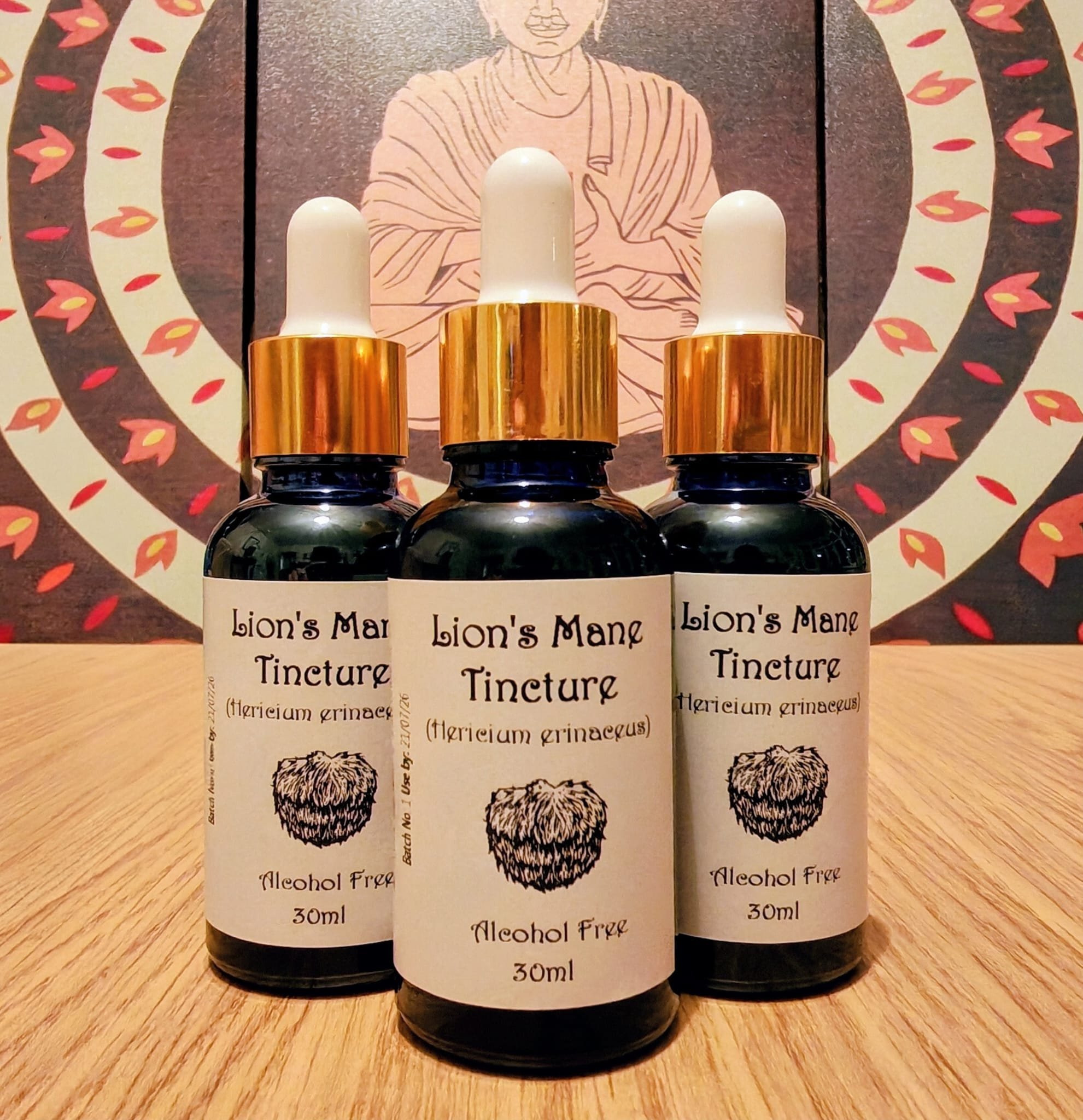
For clarity, focus, and quiet attentiveness
30ml glass dropper bottle
Lion’s mane (Hericium erinaceus) is a distinctive, cascading white mushroom long valued in traditional practice for its association with the mind and nervous system.
Unlike many wild fungi, lion’s mane has a long history of careful cultivation. Our lion’s mane is grown in Wales under controlled conditions that prioritise quality, consistency, and respect for the organism itself. This cultivated approach allows the mushroom to develop fully without pressure on wild ecosystems, while still honouring its traditional use.
Historically, lion’s mane has been regarded as a mushroom of awareness and steadiness — one associated with mental clarity, memory, and the maintenance of calm focus rather than stimulation. Traditional texts and modern interest alike tend to frame lion’s mane as supportive over time, something built into daily or seasonal routines rather than used sporadically.
Our lion’s mane tincture is made slowly using vegetable glycerine and water, creating a completely alcohol-free extraction that suits those seeking a gentler preparation. This method draws out water-soluble compounds while keeping the final tincture smooth, mild, and easy to incorporate into everyday use.
Prepared in small batches with patience and care, this tincture reflects our preference for quiet craft over intensity — allowing the character of the mushroom to speak for itself.
This is a tincture for moments that call for clarity without urgency, and for those drawn to steadier, more attentive rhythms.
Ingredients:
Lion’s mane (Hericium erinaceus), vegetable glycerine, water
(Cultivated in Wales)
Suggested use:
Traditionally taken in small amounts as part of a daily routine.
Made in small batches
Alcohol-free (glycerine & water extraction)
Cultivated in Wales
Traditionally associated with clarity and nervous system support
For a deeper exploration of lion’s mane, including neurological research and traditional use, see our Forager’s Guide to Lion’s Mane.
Made by good folk, from wild stuff, for kind souls.
Every purchase keeps our fire burning — feeding people, funding projects, and planting seeds for a kinder world. 🌱
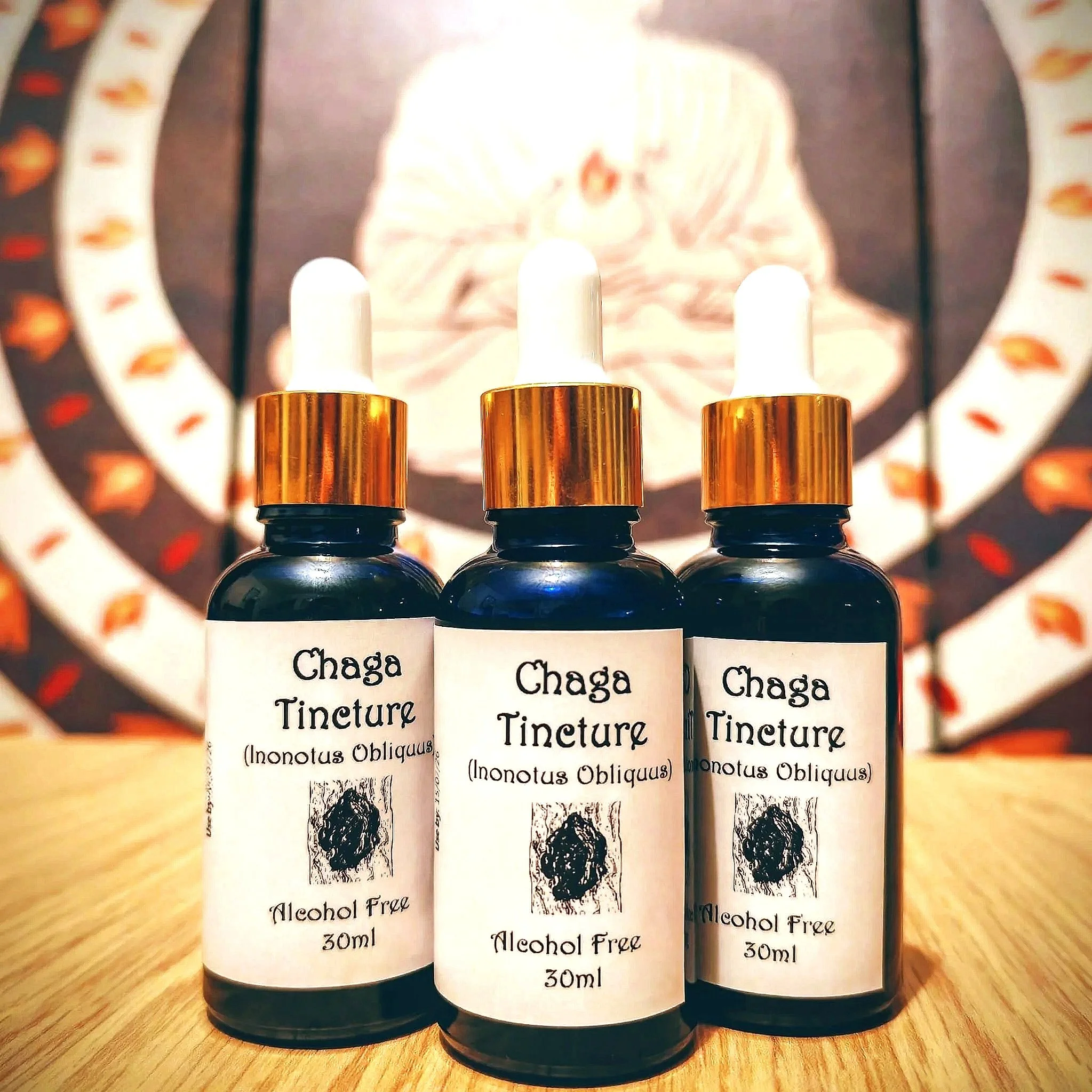
Chaga, prepared with intention
30ml glass dropper bottle
Known as “The King Of Medicinal Mushrooms”, Chaga (Inonotus obliquus) is a slow-growing forest fungus shaped by cold climates, clean air, and time.
Found growing on mature birch trees in northern forests, Chaga has been gathered for centuries across Northern Europe, Russia, and parts of Asia. Traditionally, it was approached not as a quick remedy, but as a deeply grounding, steady presence, often prepared patiently and returned to regularly as part of long-term routines.
A triple extract reflects that same philosophy of patience.
This tincture is made using a three-stage extraction process, traditionally used to draw out different qualities of dense, woody fungi like Chaga. By working with water and vegetable glycerin over time, the extraction captures both water-soluble and glycerin-soluble components, resulting in a fuller, more rounded preparation — without the use of alcohol.
Our Chaga Triple Extract Tincture is made slowly, in small batches, using carefully sourced Chaga and traditional methods adapted for an alcohol-free finish. The result is a concentrated yet gentle tincture that fits easily into everyday rhythms.
This is Chaga in its most complete, considered form — deep, steady, and quietly supportive by nature.
Ingredients
Chaga (Inonotus obliquus), vegetable glycerin, water
Notes
• Alcohol-free triple extraction
• Made in small batches
• Deep, grounding, and steady in character
• Prepared slowly using traditional principles
To explore chaga in more depth, including identification, traditional use and modern research context, see our full Forager’s Guide to Chaga.
Made by good folk, from wild stuff, for kind souls.
Every purchase keeps our fire burning — feeding people, funding projects, and planting seeds for a kinder world. 🌱
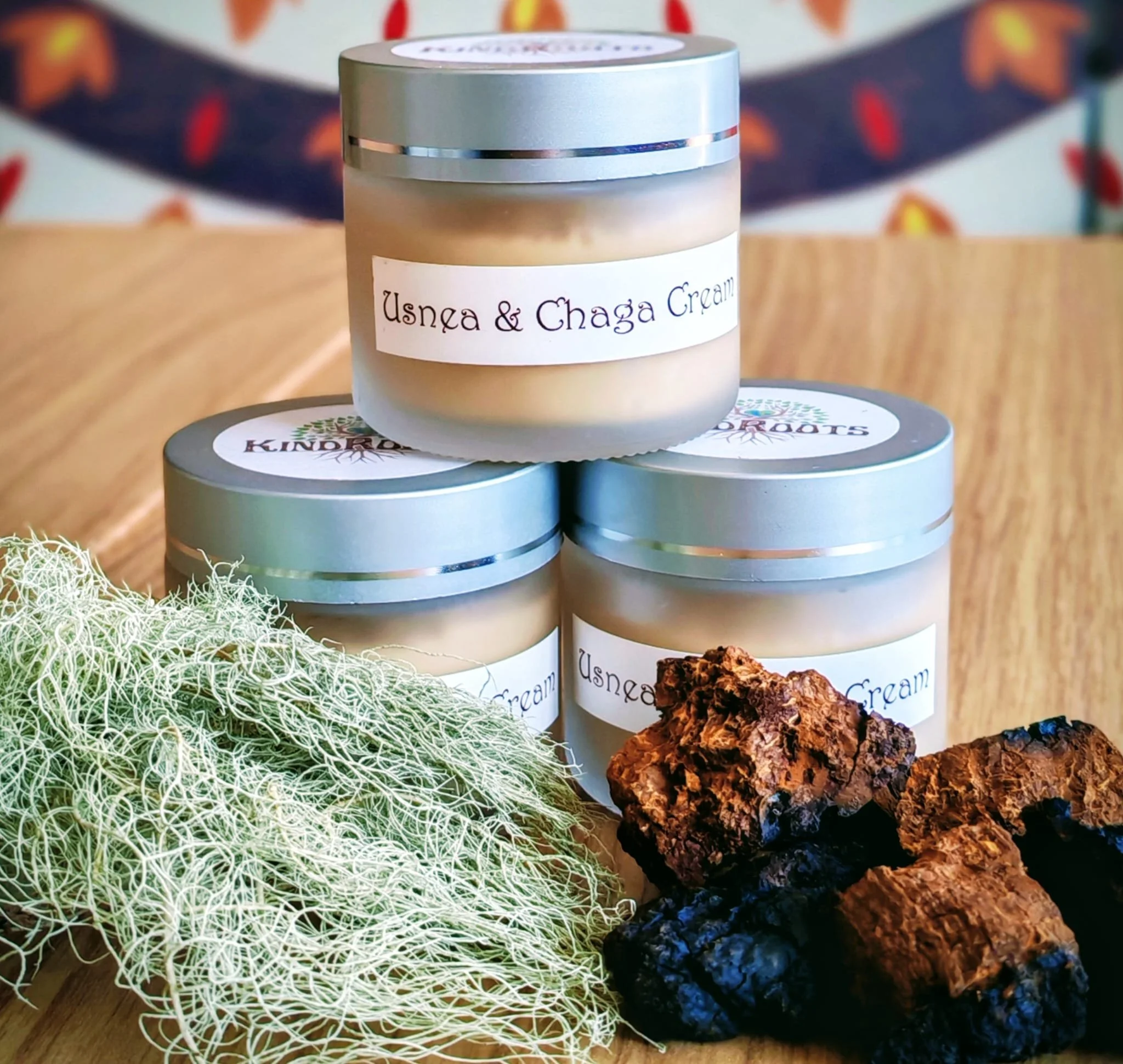
For skin that has opinions about the weather
This cream was made for skin that lives outdoors — exposed to wind, weather, washing, and everyday wear.
Chaga and Usnea are both forest-grown organisms traditionally gathered from clean, unpolluted environments. In folk traditions, they were often included in balms and salves made to protect, soothe, and care for skin, particularly when it had been challenged by the elements. Not as quick fixes, but as steady, supportive ingredients used over time.
Our Chaga & Usnea Cream brings these woodland ingredients together in a rich, nourishing moisturiser designed to soften, condition, and support the skin’s natural barrier.
The base of coconut oil, shea butter, and beeswax creates a protective layer that helps lock in moisture while keeping skin feeling supple rather than greasy. These ingredients are widely used in natural skincare for their ability to hydrate, soften, and shield the skin from dryness.
Chaga and Usnea extracts are added for their traditional association with calming and skin-conditioning properties, contributing to a formula that feels grounding, soothing, and restorative in character. Geranium and lemongrass essential oils lend a gentle, fresh scent and are commonly used in skincare for their balancing and refreshing qualities, leaving skin feeling clean and comfortable.
The result is a versatile, everyday cream — rich enough for hands and weathered skin, yet gentle enough for regular use wherever skin needs a little extra care.
This is a moisturiser made slowly, with intention — practical, unfussy, and rooted in the landscapes these ingredients come from.
Ingredients
Chaga extract, Usnea extract, coconut oil, shea butter, beeswax, geranium essential oil, lemongrass essential oil
Size
60ml glass jar
Notes
• Handmade in small batches
• Deeply moisturising and protective
• Helps soften and condition dry or weather-exposed skin
• Naturally scented with geranium & lemongrass
This product is a cosmetic moisturiser for external use only.
To explore chaga in more depth, including identification, traditional use and modern research context, see our full Forager’s Guide to Chaga or Usnea.
Made by good folk, from wild stuff, for kind souls.
Every purchase keeps our fire burning — feeding people, funding projects, and planting seeds for a kinder world. 🌱
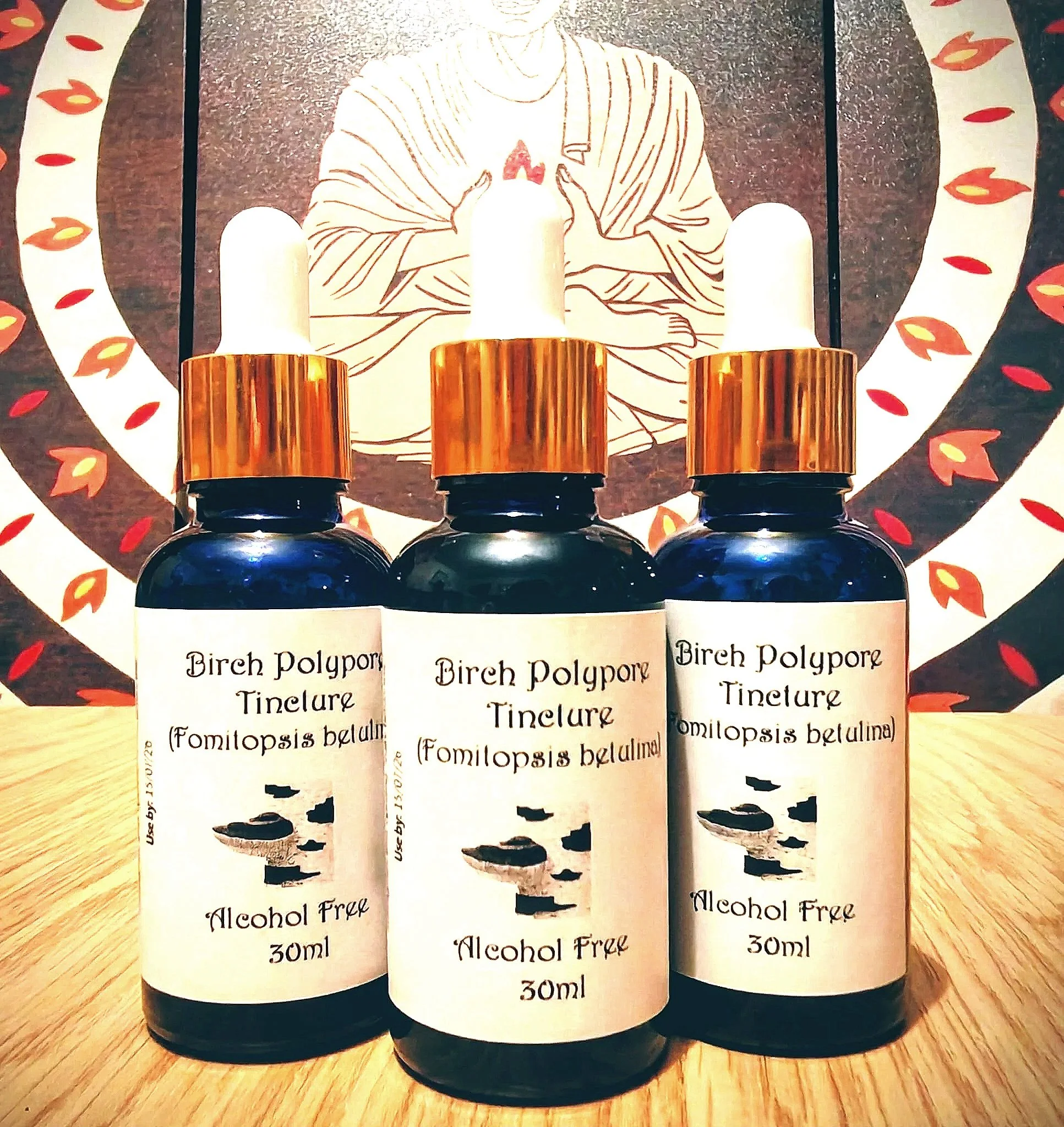
Quietly practical, like the fungus itself.
30ml glass dropper bottle
Birch polypore is a mushroom with a long, practical history.
Growing quietly on birch trees across northern forests, Fomitopsis betulina has been found alongside human journeys for thousands of years. It’s perhaps best known from archaeological finds — carried, dried, and valued not for ornament, but for usefulness. This is a fungus that earned its place by being reliable.
Traditionally, birch polypore was gathered and worked with for its drying, steady, and protective qualities, and was often associated with resilience and self-sufficiency. It wasn’t a flashy mushroom, but one that appeared again and again in folk practices where practicality mattered more than performance.
Our Birch Polypore Tincture is made as a slow, alcohol-free extraction using vegetable glycerin and water, a method well suited to its firm, fibrous nature. Prepared in small batches with patience, this approach allows the character of the mushroom to come through gently, without harshness.
This is a tincture for those who appreciate straightforward preparations — simple, measured, and quietly dependable.
Ingredients
Birch polypore (Fomitopsis betulina), vegetable glycerin, water
Notes
• Alcohol-free
• Made in small batches
• Traditionally inspired extraction method
• Dry, steady, and grounding in character
Learn more about birch polypore, its ecology and historical use, in our Forager’s Guide to Birch Polypore.
Made by good folk, from wild stuff, for kind souls.
Every purchase keeps our fire burning — feeding people, funding projects, and planting seeds for a kinder world. 🌱

Some things exist in the space between practicality and comfort.
Chaga (Inonotus obliquus) is a slow-growing forest fungus, traditionally prepared with patience and used as part of long-term routines rather than quick fixes. Cacao and coffee, by contrast, have always belonged to moments of warmth, familiarity, and quiet indulgence — grounding rituals as much as flavours.
This blend brings those worlds together.
Wild Scottish Chaga is combined with ethically sourced coffee and raw cacao, creating a powdered preparation that feels rich and familiar without tipping into excess. The cacao adds depth and softness, the coffee brings warmth and body, and the Chaga sits underneath it all — steady, earthy, and unhurried.
Traditionally, Chaga was simmered or infused gently, allowing time to do the work. Here, that same slow philosophy is adapted into a more accessible form — one that fits easily into everyday rhythms while still rewarding a pause.
On paper, this blend is a food supplement.
In practice, it leans toward comfort, routine, and moments that don’t need to be rushed.
We’ll let the label do its job.
You can do the rest.
Prepared in small batches with simple ingredients, Chagaccino is for those who like their routines grounding, familiar, and just a little bit comforting — without pretending to be anything more complicated than that.
Ingredients
Wild Scottish Chaga (Inonotus obliquus), ground coffee (ethically sourced), raw cacao powder
Suggested Preparation Method
Add 2–4 teaspoons of the blend to hot water using a cafetière. Allow to steep for 3–5 minutes, then strain.
Preparation method provided for convenience only.
Notes
• Sold as a food supplement
• Made in small batches
• Rich, grounding, and gently indulgent in character
• Prepared using simple, considered methods
Food supplements should not be used as a substitute for a varied diet. Not intended to diagnose, treat, or prevent disease.
To explore these ingredients in more depth, including identification, traditional use and modern research context, see our full Forager’s Guide to Chaga or Raw Cacao.
Made by good folk, from wild stuff, for kind souls.
Every purchase keeps our fire burning — feeding people, funding projects, and planting seeds for a kinder world. 🌱

Forest flavours. Officially a supplement
Some flavours belong together because they come from similar places — if not geographically, then in spirit.
Chaga (Inonotus obliquus) grows slowly on birch trees in cold northern forests, shaped by long winters and clean air. Pine needles come from those same landscapes, sharp-scented and resinous, carrying the unmistakable character of woodland. Chai spices add warmth and familiarity — grounding the blend and softening the edges.
Traditionally, Chaga was prepared patiently and returned to often, while pine needles and warming spices were used to bring brightness and balance to otherwise steady preparations. Together, they create a blend that feels fresh, aromatic, and quietly grounding, without being heavy or overpowering.
This blend combines wild Scottish Chaga, carefully prepared pine needles, and a chai-style spice mix into a loose preparation intended to be used thoughtfully and in moderation.
Officially, this product is not a tea.
It is a food supplement with a suggested preparation method involving hot water.
The forest doesn’t mind what you call it — but the paperwork does.
Prepared in small batches with simple ingredients, this blend suits those who like their routines warming, woodland-led, and gently ritualistic — without unnecessary fuss.
Same ingredients.
Same kettle.
Different wording.
Loose leaf - Optional compostable teabags
Ingredients
Wild Scottish Chaga (Inonotus obliquus), pine needles, chai spices
Suggested Preparation Method
Add 2–3 teaspoons of the blend to hot water using a cafetière, filter, or teabag. Allow to steep for 3–5 minutes, then strain.
Preparation method provided for convenience only.
Recommended Intake
Do not exceed one prepared serving per day.
Notes
• Sold as a food supplement
• Made in small batches
• Fresh, resinous, and warming in character
• Prepared using simple, traditional principles
Food supplements should not be used as a substitute for a varied diet. Not intended to diagnose, treat, or prevent disease.
To explore the ingredients in more depth, including identification, traditional use and modern research context, see our full Forager’s Guide to Chaga or Pine Needles.
Made by good folk, from wild stuff, for kind souls.
Every purchase keeps our fire burning — feeding people, funding projects, and planting seeds for a kinder world. 🌱
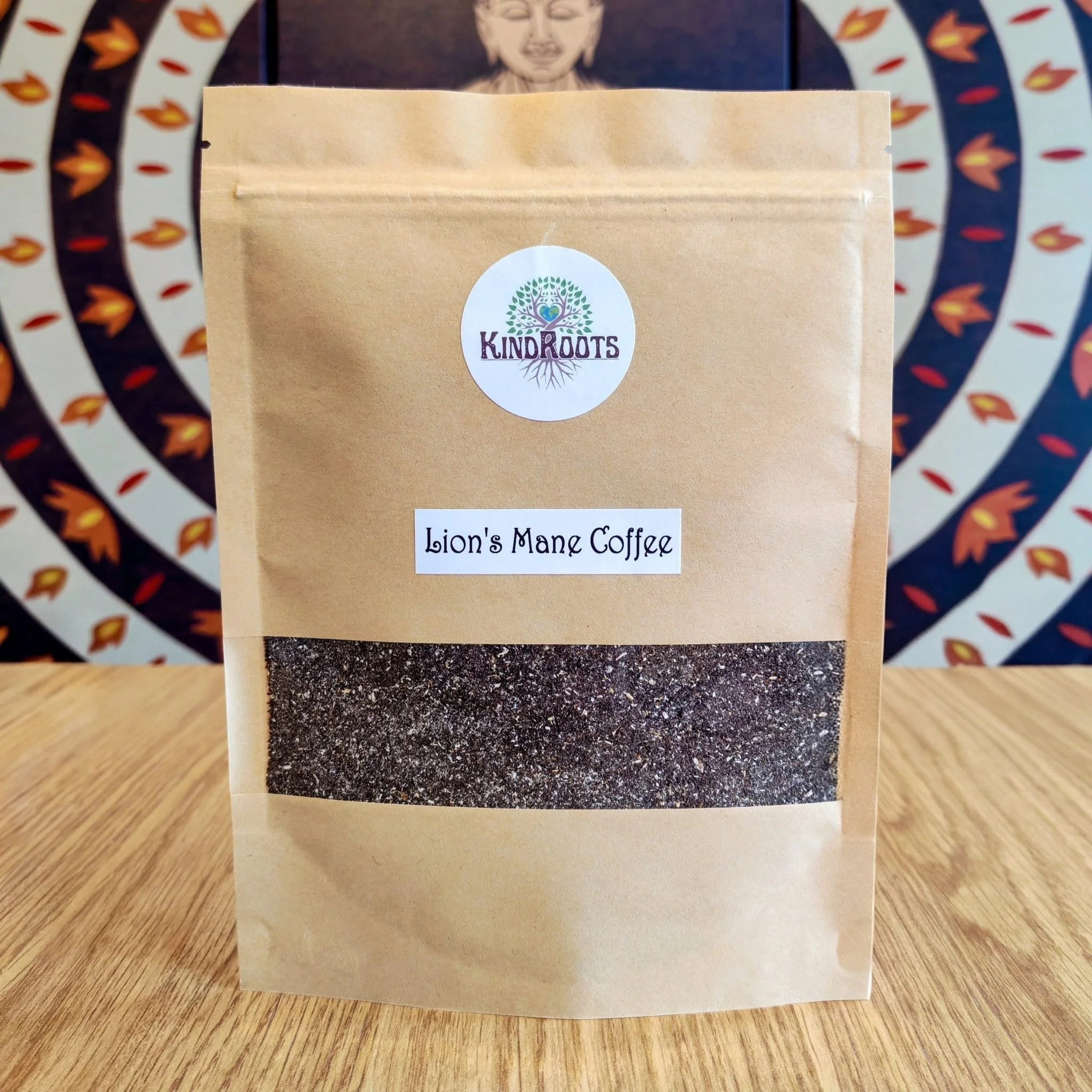
A slower cup for steadier mornings
This blend brings together carefully roasted coffee with Lion’s Mane mushroom (Hericium erinaceus), creating a drink intended for unhurried mornings and longer rhythms rather than sharp jolts.
Coffee has long been part of daily ritual — not just as a stimulant, but as a pause, a marker of time, a reason to stop and gather. Lion’s Mane has traditionally been approached in much the same way: as a food-like mushroom valued for steady inclusion rather than intensity.
Combined thoughtfully, the two sit comfortably together. The coffee provides warmth, depth and familiarity, while Lion’s Mane is present quietly in the background, prepared and taken as part of a routine rather than a shortcut.
Rather than overpowering the cup, Lion’s Mane is included in measured proportion, allowing the character of the coffee to remain intact. The result is a balanced, grounding blend suited to daily use — something to return to, not rush through.
Our Lion’s Mane Coffee Blend is made in small batches using cultivated Lion’s Mane grown in Wales and quality roasted coffee. The mushroom is prepared carefully before blending, ensuring it integrates smoothly into the drink without dominating flavour or texture.
This is a coffee blend shaped by pace and intention — familiar, steady, and made for everyday use.
Ingredients
Roasted coffee, cultivated Lion’s Mane mushroom (Hericium erinaceus)
Preparation
Prepare as you would your usual coffee — brewed, pressed or filtered. The blend is designed to fit easily into existing routines without additional steps or complexity.
When brewed, Lion’s Mane can release a small amount of natural mucilage. This may appear as a slightly fuller mouthfeel or gentle cloudiness in the cup and is a normal characteristic of the mushroom. It doesn’t affect flavour and is simply part of how Lion’s Mane behaves when prepared with hot water.
Use a coffee frother, or stir vigorously, to get a creamier consistency from the Lion’s Mane.
Notes
• Cultivated Lion’s Mane grown in Wales
• Balanced coffee flavour with subtle mushroom presence
• Designed for regular, everyday use
• Made in small batches
To explore Lion’s Mane in more depth, including identification, traditional use and modern research context, see our full Forager’s Guide to Lion’s Mane.
Made by good folk, from wild stuff, for kind souls.
Every purchase keeps our fire burning — feeding people, funding projects, and planting seeds for a kinder world. 🌱
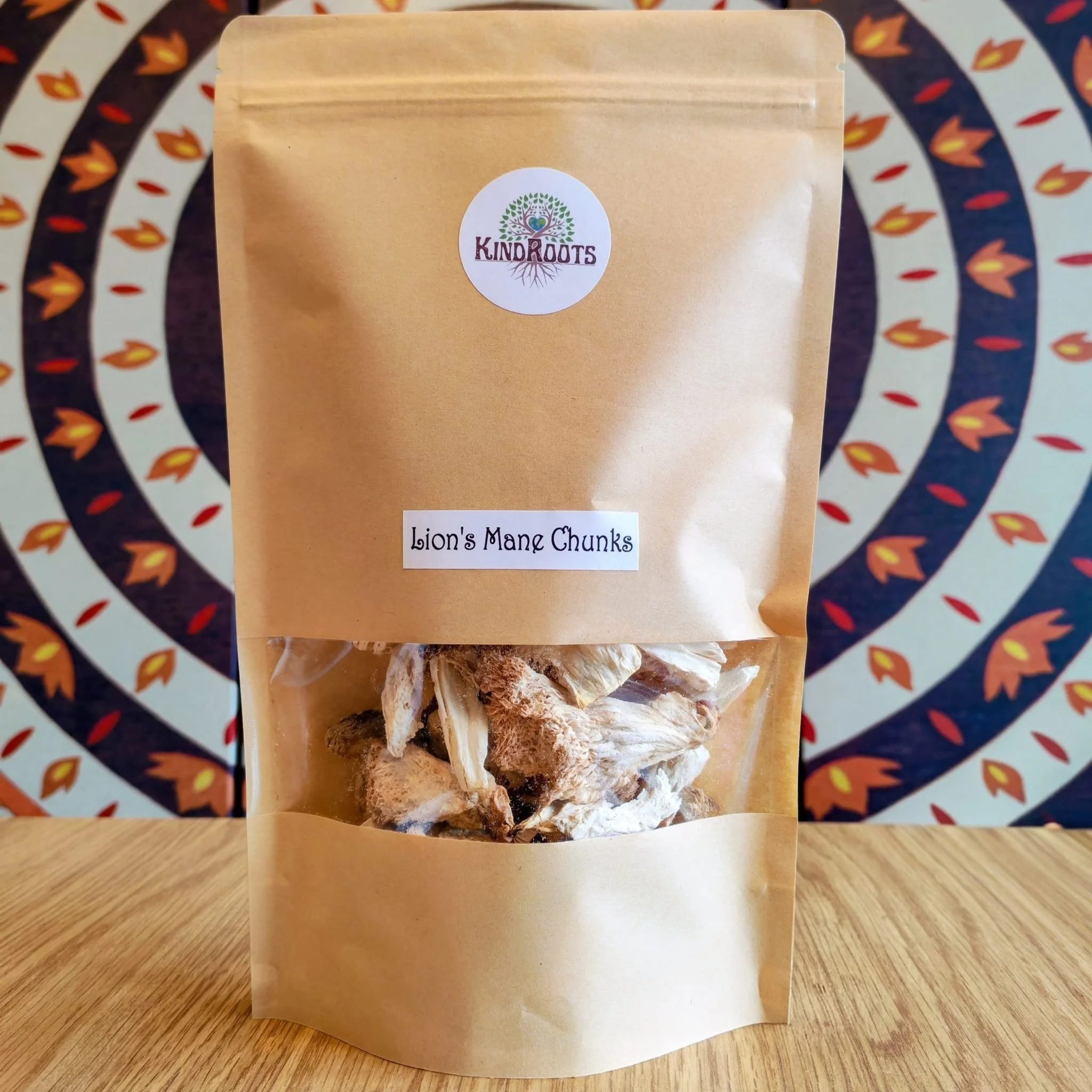
A soft-bodied mushroom with a long memory for patience
Lion’s Mane mushroom (Hericium erinaceus) is an unusual and distinctive edible fungus, recognised by its cascading white spines and gentle, fibrous texture.
Traditionally valued across parts of East Asia as both a food and tonic mushroom, Lion’s Mane has long been approached as something to be worked with steadily rather than intensively. Historical use emphasised regular inclusion and careful preparation, often as part of everyday meals or longer-term routines rather than short-term intervention.
Unlike dense, woody medicinal mushrooms such as chaga, Lion’s Mane has a softer structure and a more neutral, food-like character. When dried and rehydrated slowly, Lion’s Mane mushroom lends itself well to gentle decoctions, broths and extended simmering.
Rather than being prized for force or intensity, Lion’s Mane has traditionally been valued for consistency — something returned to over time, prepared simply and without urgency.
Our Lion’s Mane mushroom chunks are cultivated in Wales using clean, controlled growing conditions that allow the fruiting bodies to develop fully before harvest. They are sliced and dried gently, then left in chunk form so you can prepare them slowly and traditionally, at your own pace.
This is Lion’s Mane mushroom in its simplest form — whole, minimally processed, and suited to steady, thoughtful preparation.
Ingredients
Cultivated Lion’s Mane mushroom (Hericium erinaceus)
Traditional Preparation
Lion’s Mane mushroom chunks can be simmered gently in water to make a light decoction or broth, or rehydrated and incorporated into cooking. Preparation is typically slow and unhurried, reflecting its traditional use as a food-like medicinal mushroom rather than a quick infusion.
Notes
• Cultivated in Wales
• Left in chunks for traditional preparation
• Edible, food-like medicinal mushroom
• Suited to steady, long-term use
To explore Lion’s Mane in more depth, including identification, traditional use and modern research context, see our full Forager’s Guide to Lion’s Mane.
Made by good folk, from wild stuff, for kind souls.
Every purchase keeps our fire burning — feeding people, funding projects, and planting seeds for a kinder world. 🌱
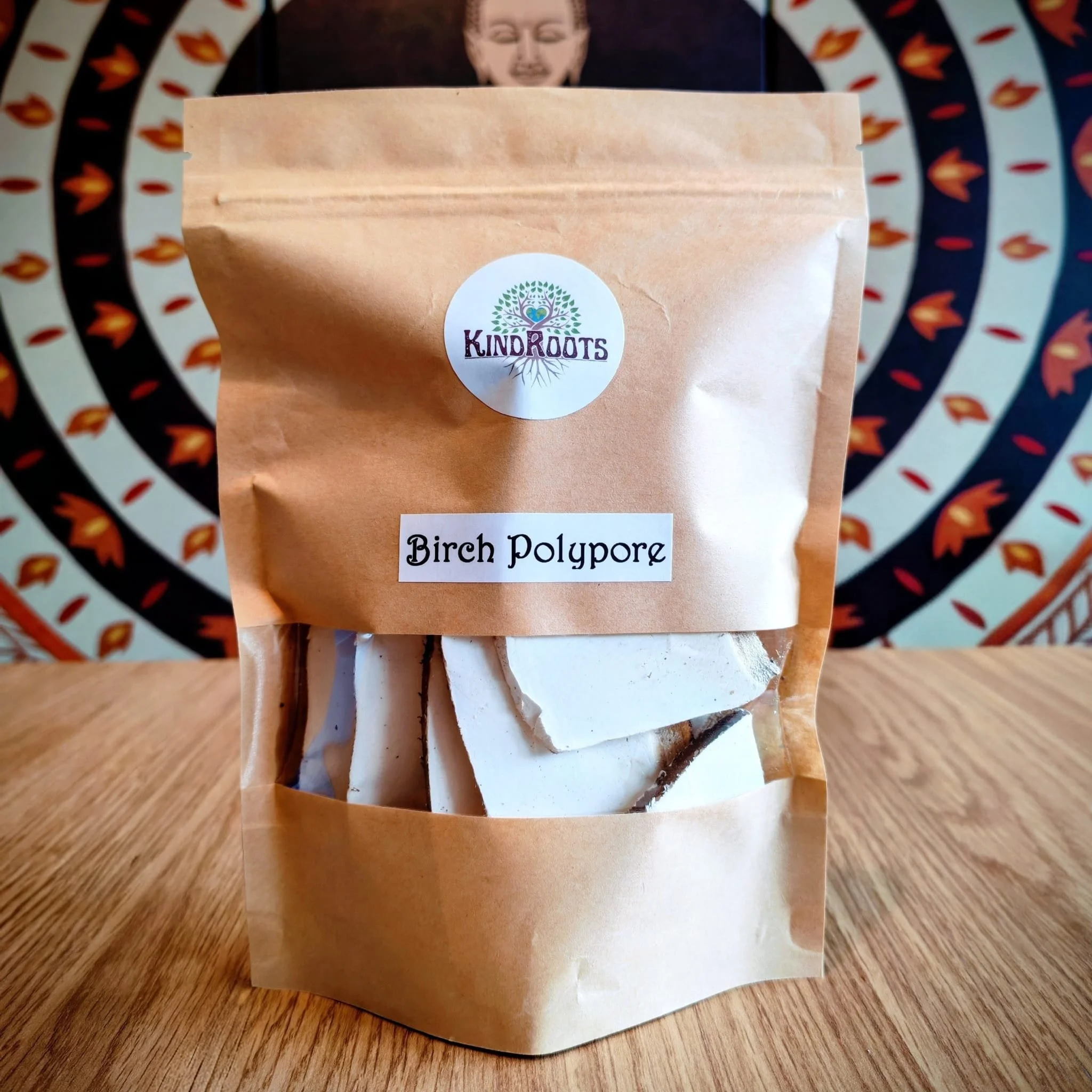
A tough forest companion shaped by use and necessity
Birch Polypore (Fomitopsis betulina) is a firm, bracket-forming fungus found growing almost exclusively on birch trees across northern forests.
Unlike soft, food-like mushrooms, Birch Polypore is dense, bitter and purposeful in character. It has a long history of practical use across Europe, where it was valued not as a delicacy or tonic, but as a dependable forest ally — something carried, prepared and returned to when needed.
Archaeological and historical records suggest Birch Polypore was used for a wide range of everyday applications, from slow decoctions to external preparations, and even as a material for carrying embers or crafting tools. Its reputation was built on reliability rather than comfort, and on function rather than flavour.
Birch Polypore grows deliberately, forming tough, leathery brackets that reflect its role in the woodland ecosystem. Traditional preparations respected this structure, typically involving long simmering or careful slicing to allow its dense material to soften and release gradually.
Our Birch Polypore is wild foraged by hand from mature birch woodland, harvested with care and dried slowly. It is sliced or left in chunky pieces to preserve its natural form, allowing you to prepare it traditionally and intentionally, without rushing or excessive processing.
This is Birch Polypore in its simplest form — robust, unrefined, and closely tied to the practical traditions that shaped its use.
Ingredients
Wild foraged Birch Polypore (Fomitopsis betulina)
Traditional Preparation
Birch Polypore has traditionally been prepared through long, gentle simmering or slow extraction methods, reflecting its dense structure and practical nature. Preparation is typically patient and deliberate, allowing time for the material to soften and release gradually.
Notes
• Wild foraged from birch woodland
• Sliced or left in chunks for traditional preparation
• Dense, bitter and robust in character
• Historically valued for practical, everyday use
• Best approached slowly and with intention
To explore Birch Polypore in more depth - including identification, traditional use and modern research context - see our full Forager’s Guide to Birch Polypore.
Made by good folk, from wild stuff, for kind souls.
Every purchase keeps our fire burning — feeding people, funding projects, and planting seeds for a kinder world. 🌱
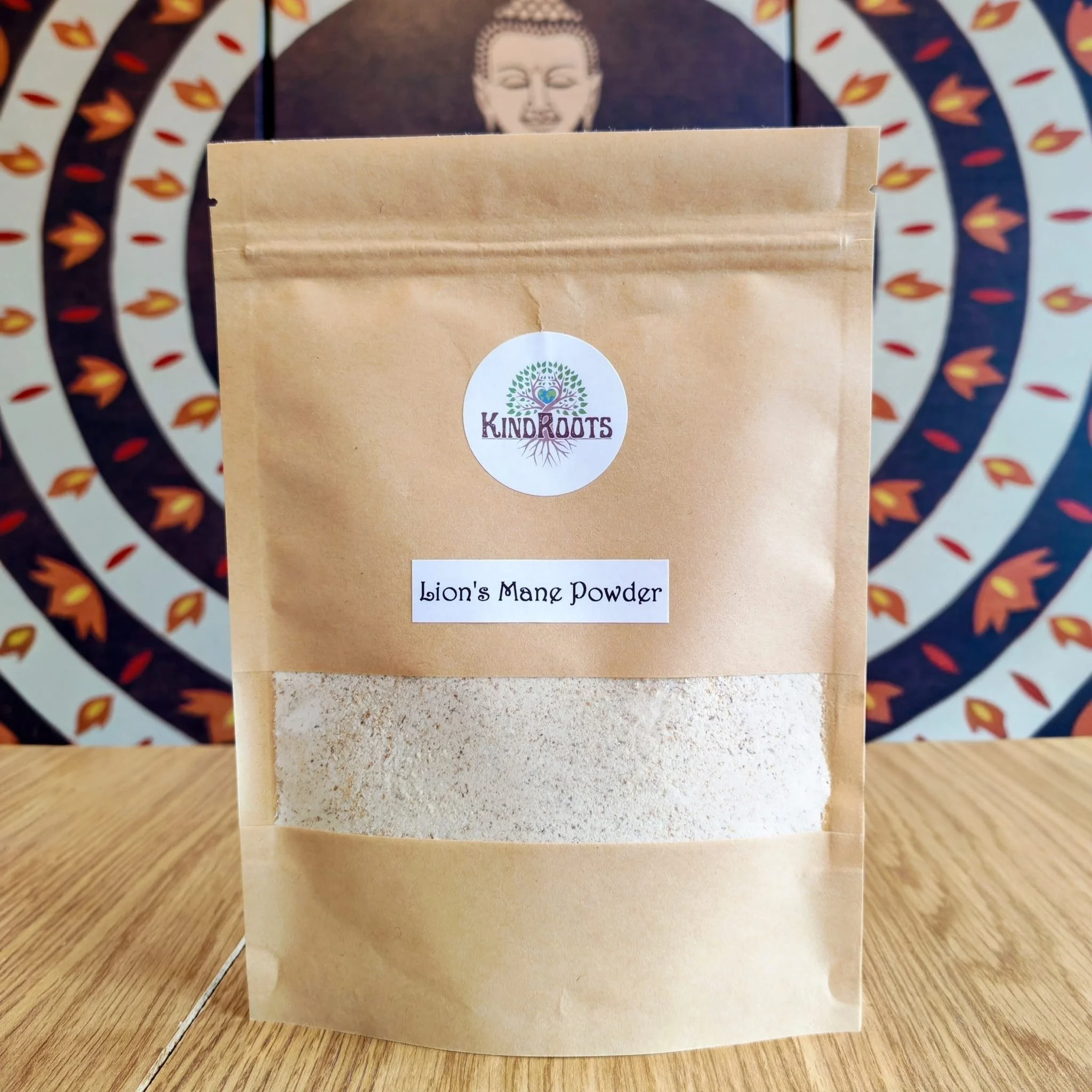
A finely ground mushroom for steady, everyday use
Lion’s Mane mushroom (Hericium erinaceus) is a distinctive edible fungus, long valued as both food and tonic within traditional East Asian practice.
Unlike whole chunks, Lion’s Mane powder offers a more accessible way to work with this mushroom regularly. Traditionally, Lion’s Mane was approached as something to be included consistently over time — prepared carefully and returned to often, rather than used for quick or dramatic effect.
With its soft structure and neutral, food-like character, Lion’s Mane lends itself well to gentle preparation. When finely ground, it becomes easy to incorporate into warm drinks, broths or everyday recipes, allowing it to sit quietly within daily routines rather than standing apart from them.
Rather than being prized for intensity, Lion’s Mane has historically been valued for consistency and familiarity — something prepared simply and used without urgency.
Our Lion’s Mane mushroom powder is cultivated in Wales using clean, controlled growing conditions. The fruiting bodies are harvested at maturity, dried gently, and milled finely to create a smooth powder suitable for everyday use.
This is Lion’s Mane in a practical, versatile form — minimally processed, carefully prepared, and intended for steady, thoughtful use.
Ingredients
Cultivated Lion’s Mane mushroom powder (Hericium erinaceus)
Traditional Preparation
Lion’s Mane mushroom powder can be stirred into hot water, broths or other warm drinks, or incorporated into cooking. Preparation is typically simple and unhurried, reflecting its traditional role as a food-like medicinal mushroom used consistently over time.
Notes
• Cultivated in Wales
• Finely milled for easy, everyday use
• Edible, food-like medicinal mushroom
• Suited to regular, steady routines
To explore Lion’s Mane in more depth, including identification, traditional use and modern research context, see our full Forager’s Guide to Lion’s Mane.
Made by good folk, from wild stuff, for kind souls.
Every purchase keeps our fire burning — feeding people, funding projects, and planting seeds for a kinder world. 🌱
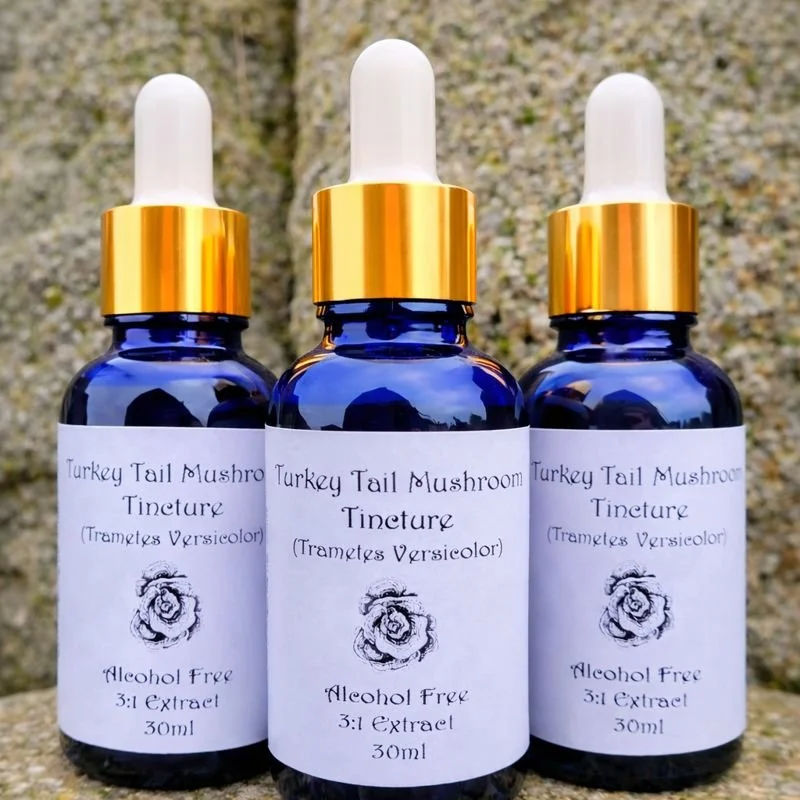
Woodland fungi. Officially for dogs. Don’t ask…
30ml glass dropper bottle
Turkey Tail (Trametes versicolor) is one of the most widely studied and traditionally used mushrooms in the world.
Found growing in layered fans on fallen hardwoods, Turkey Tail has been gathered for centuries across Europe, Asia, and North America. In traditional herbal and folk practices, it was valued for its resilient, adaptive nature — a mushroom associated with steadiness, balance, and long-term support rather than quick effects.
Our Turkey Tail tincture is made using carefully sourced woodland fungi and prepared slowly as a traditional glycerin extraction, allowing the character of the mushroom to be captured in a concentrated, shelf-stable form. It’s a simple, unfussy preparation — made with the same care and attention we bring to everything we produce.
Thanks to new UK “Novel Food” laws, this tincture is labelled for canine use, and is offered for those wishing to include Turkey Tail as part of their dog’s routine. This is the same human/animal safe product we have always sold, but the UK government have labelled it “not for human consumption”. It turns out, four legs make all the difference when it comes to mushroom paperwork…
Ingredients
Turkey Tail mushroom (Trametes versicolor), vegetable glycerin, water
Notes
• Labelled for dogs - Not intended for human consumption
• Made in small batches
• Traditionally prepared using glycerin extraction
• Simple, clean ingredient list
Important Information
This product is labelled for canine use. If your dog is pregnant, unwell, or taking medication, consult a qualified professional before use.
Suggested Use (Guidance Only):
Small dogs (up to 10kg): 1–2 drops daily
Medium dogs (10–25kg): 2–4 drops daily
Large dogs (25kg+): 4–6 drops daily
Add to food or treats. Introduce slowly.
We’re just here helping dogs live their best mushroom-powered lives — tails up, vibes high. 🐾
Our Forager’s Guide to Turkey Tail explores this mushroom’s identification, historical use and the growing body of research surrounding it.
Made by good folk, from wild stuff, for kind souls.
Every purchase keeps our fire burning — feeding people, funding projects, and planting seeds for a kinder world. 🌱

Slow-growing forest fungi with absolutely no sense of urgency
Known as “The King Of Medicinal Mushrooms”, Chaga (Inonotus obliquus) is a slow-growing fungus with a deep relationship to the forests it comes from.
Found growing on mature birch trees in cold northern climates, Chaga has been gathered for centuries across Northern Europe, Russia, and parts of Asia. It was traditionally valued not for quick effects or stimulation, but for its steady, grounding presence and its association with long-term resilience and balance.
Unlike more delicate mushrooms, Chaga grows slowly and deliberately, forming over many years in response to its environment. Traditional herbal and folk practices describe it as deeply earthy, robust, and fortifying in character, often prepared patiently over time as part of daily or seasonal routines rather than used in haste.
Historically, Chaga was simmered slowly or infused gently, allowing its dense structure to soften and release gradually. This unhurried preparation mirrors the way it has always been approached — as something to return to regularly, not something to rush.
Our Chaga mushroom chunks are wild foraged by hand from remote Scottish birch forests, far from roads, agriculture, and pollution. They are dried carefully and left whole, allowing you to prepare them traditionally, at your own pace, whether as a long simmer or gentle infusion.
This is Chaga in its simplest form — unprocessed, unrefined, and deeply rooted in the landscape it comes from.
Ingredients
Wild Scottish Chaga (Inonotus obliquus)
Traditional Preparation
Chaga chunks are traditionally simmered gently in water over a longer period, then strained before use. Chunks can often be reused multiple times.
Notes
• Wild foraged in the Scottish Highlands
• Left whole for traditional, slow preparation
• Deep, earthy, and grounding in character
• Prepared with patience, not shortcuts
To explore chaga in more depth, including identification, traditional use and modern research context, see our full Forager’s Guide to Chaga.
Made by good folk, from wild stuff, for kind souls.
Every purchase keeps our fire burning — feeding people, funding projects, and planting seeds for a kinder world. 🌱

Definitely a supplement. Involves hot water.
Some combinations feel inevitable.
Chaga (Inonotus obliquus) is a slow-growing forest fungus shaped by cold air, patience, and time. Chai spices, by contrast, come from warmth, trade routes, and kitchens built around comfort and ritual. This blend brings the two together — steady and grounding on one side, aromatic and familiar on the other.
Traditionally, Chaga was prepared patiently, often simmered or infused over time and returned to regularly as part of long-term routines rather than quick fixes. Chai spice blends, meanwhile, have long been used to add warmth, depth, and balance — not to rush the body forward, but to make slower moments more enjoyable.
This blend combines wild Scottish Chaga with a carefully chosen chai-style spice mix and coffee, creating a powdered preparation intended to be used thoughtfully and in moderation.
Our Chaga Chai Latte Blend is prepared in small batches using simple ingredients and no unnecessary fillers. It’s designed for those who like their routines grounded, warming, and just a little bit ceremonial — without pretending to be anything other than what it is.
Officially speaking, due to new UK “Novel Food” laws this product is not a drink.
It is a food supplement with a suggested preparation method involving hot water.
Same forest fungus.
Same spices.
Different paperwork.
Loose leaf - Optional compostable teabags
Ingredients
Wild Scottish Chaga (Inonotus obliquus), ground coffee, chai spices
Suggested Preparation Method
Add 2 teaspoons of the blend to hot water using a cafetière, filter, or teabag. Allow to steep for 3–5 minutes, then strain.
Preparation method provided for convenience only.
Notes
• Sold as a food supplement
• Prepared in small batches
• Warming, grounding, and aromatic in character
• Made with simple, carefully sourced ingredients
Food supplements should not be used as a substitute for a varied diet. Not intended to diagnose, treat, or prevent disease.
To explore chaga in more depth, including identification, traditional use and modern research context, see our full Forager’s Guide to Chaga.
Made by good folk, from wild stuff, for kind souls.
Every purchase keeps our fire burning — feeding people, funding projects, and planting seeds for a kinder world. 🌱

Made and drank by a Yorkshireman…
Some flavours don’t announce themselves — they just make sense once you taste them.
Chaga (Inonotus obliquus) grows slowly on birch trees in cold northern forests, shaped by long winters and clean air. Pine needles come from those same landscapes — sharp, resinous, and unmistakably fresh — carrying the scent of woodland even before they meet hot water.
Together, they create a blend that feels clean, grounding, and quietly bracing, with Chaga’s depth balanced by the bright, green edge of pine. It’s forest-forward and uncomplicated, leaning more toward clarity than comfort.
Traditionally, Chaga was prepared patiently and returned to regularly, while pine needles were gathered for their ability to bring lift and freshness to simple infusions. This blend draws on both traditions, offering a preparation that feels steady yet invigorating, without heaviness.
This is a loose blend intended to be used thoughtfully and in moderation, made in small batches using simple ingredients and no unnecessary additions.
From a regulatory point of view, it lives firmly in the category of food supplement.
From a practical point of view, it smells like the woods and behaves accordingly.
Loose leaf - Optional compostable teabags
Ingredients
Wild Scottish Chaga (Inonotus obliquus), pine needles
Suggested Preparation Method
Add 2–3 teaspoons of the blend to hot water using a cafetière, filter, or teabag. Allow to steep for 3–5 minutes, then strain.
Preparation method provided for convenience only.
Notes
• Sold as a food supplement
• Made in small batches
• Fresh, resinous, and deeply woodland in character
• Prepared using simple, considered methods
Food supplements should not be used as a substitute for a varied diet. Not intended to diagnose, treat, or prevent disease.
To explore the ingredients in more depth, including identification, traditional use and modern research context, see our full Forager’s Guide to Chaga or Pine Needles.
Made by good folk, from wild stuff, for kind souls.
Every purchase keeps our fire burning — feeding people, funding projects, and planting seeds for a kinder world. 🌱
We’re not here to offer miracle cures - just honest, earth-grown products made to support wellbeing, flavour, and connection to the world around us. Everything is small-batch, season-led, and made with transparency, so you know exactly what’s in your jar, pouch, or bottle.
We work with foraged and natural ingredients based on their long-held traditional uses, blending old wisdom with our own hands-on experience. But nature works differently for everyone, and every body has its own story. If you’re pregnant, breastfeeding, on medication, or managing a health condition, it’s always wise to check in with a healthcare professional before trying something new.
We believe in mindful, informed use of nature’s gifts, and we’re always happy to chat, guide, and share what we know.