
Birch Polypore ‘Fomitopsis betulina’
Identification & Appearance
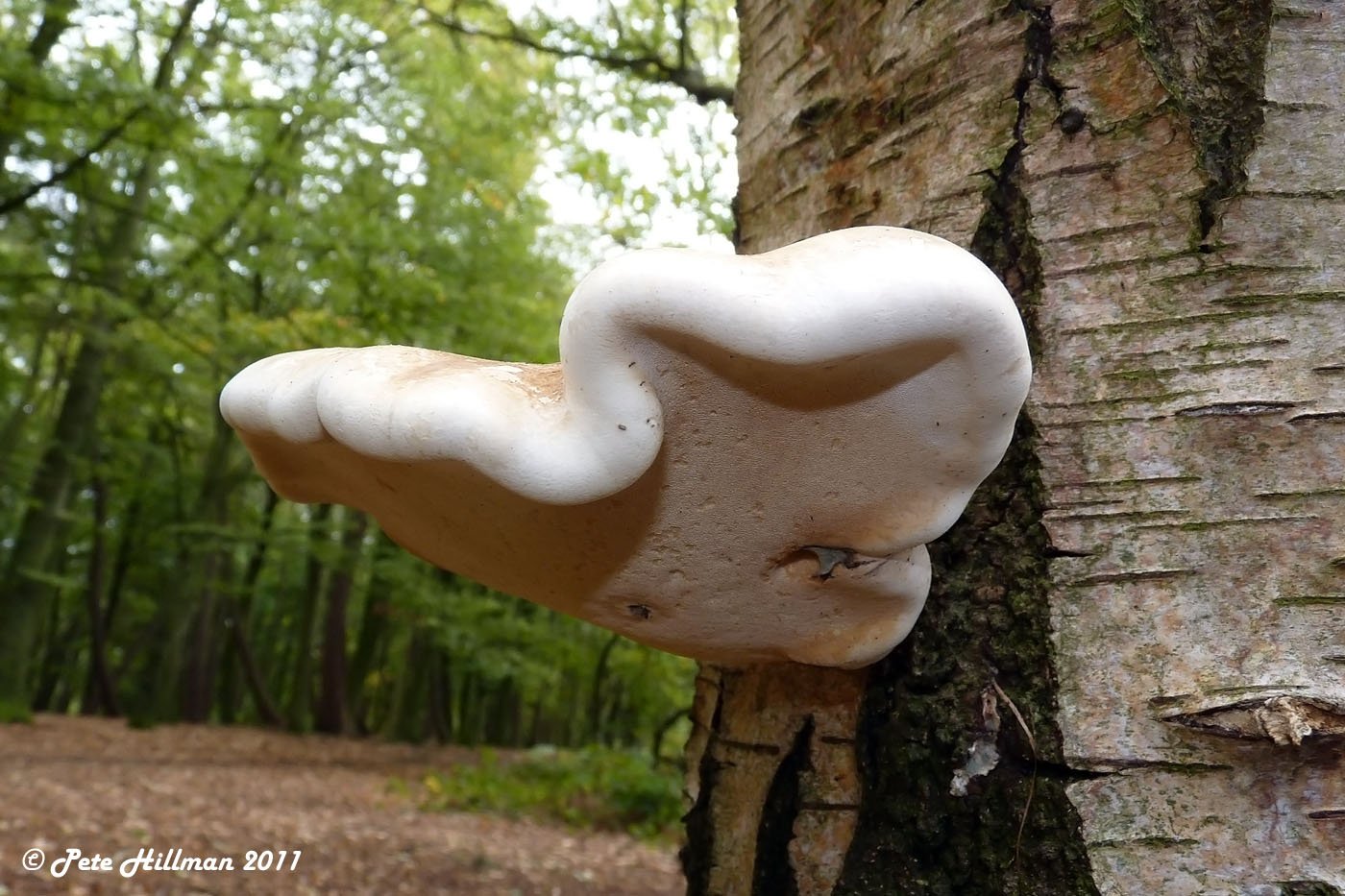
Birch polypore is a quiet, unmistakable presence once learned. It grows directly from the trunks of birch trees as smooth, rounded brackets that appear almost sculpted rather than grown. Fresh specimens are pale cream to light grey, with a softly matt surface that can look velvety in damp weather and chalky when dry.
Unlike many bracket fungi with ridged or layered tops, birch polypore has a clean, almost minimalist form. The fruiting body is thick and solid, often kidney- or cushion-shaped, with a slightly darker margin. The underside is covered in fine pores rather than gills, forming a smooth, uniform surface.
Birch polypore feels dense and leathery when mature, with a firm interior that dries into a cork-like texture. Its visual simplicity belies its complexity and long-standing relationship with humans.
Birch polypore typically appears as:
Smooth, rounded bracket fungi on birch trunks
Pale cream to grey upper surface
Fine white pores on the underside
Thick, dense flesh
Growth directly from living or dead birch
It is most commonly confused with:
Young hoof fungus on non-birch trees
Other pale polypores growing on different hosts
Host tree identification is essential. True birch polypore grows almost exclusively on birch.
Habitat, Growth & Ecology
Birch polypore is native to the UK and widespread across northern Europe. It grows on birch trees, both living and dead, forming a long-term relationship with its host. While it is technically parasitic, it also acts as a decomposer, contributing to forest nutrient cycles once the tree dies.
Ecologically, birch polypore plays a role in woodland succession. It breaks down wood slowly, returning material to the soil and supporting fungal biodiversity. Its presence often signals aging or stressed birch rather than immediate decline.
Birch polypore grows steadily over months rather than rapidly, producing one or more fruiting bodies per tree.
History, Tradition & Cultural Use
Birch polypore has a deep history of use across northern and central Europe. It appears in archaeological records, most famously carried by Otzi the Iceman, suggesting its importance long before written herbal traditions.
Historically, birch polypore was valued for its practicality. It was used as a wound dressing, a digestive support, a fire starter and a material for tools. In folk medicine, it was prepared as teas or decoctions and used where endurance, protection and preservation were needed.
Birch polypore was not used casually. It was respected as a functional forest ally rather than a food or tonic.
Myth, Lore & Symbolism
Birch polypore has long been associated with protection and survival. Its presence alongside birch, a tree symbolically linked with renewal and resilience, reinforced its reputation as a guardian fungus.
In folk understanding, birch polypore represented preparedness. It was carried, dried and stored, ready to be used when needed rather than consumed daily. Its symbolism reflects readiness rather than abundance.
Areas of Scientific Research Interest
Modern scientific interest in birch polypore has focused on its antimicrobial compounds, anti-inflammatory activity and interaction with gastrointestinal environments. Research often examines extracts and isolated compounds, particularly triterpenes and polysaccharides.
Birch polypore is increasingly referenced in modern mycological and pharmacological studies due to its long-standing traditional use.
Antimicrobial Research
Studies suggest birch polypore contains compounds that:
Interact with bacterial and fungal models in laboratory settings
Support antimicrobial activity relevant to topical and internal environments
These findings help explain its historical use in wound care and preservation contexts.
Digestive and Anti-inflammatory Research
Research has explored birch polypore’s interaction with gut environments, including:
Modulation of inflammatory pathways
Supportive effects on gastrointestinal comfort
These areas remain largely preclinical but align with traditional digestive use.
Nutritional Profile: Vitamins & Minerals
Birch polypore is not consumed for nutrition, but it contains bioactive compounds that support functional use.
Reported constituents include:
Polysaccharides - support immune research pathways and gut interaction
Triterpenes - associated with anti-inflammatory and antimicrobial research
Beta-glucans - support immune modulation research
Trace minerals - contribute to overall biochemical activity
Its value lies in functional chemistry rather than nutritional density.
Traditional Use vs Modern Research
Traditional use of birch polypore was shaped by necessity and observation. People used it where protection, endurance and preservation were required. Effects were judged by outcome: wounds healed, digestion settled, materials lasted longer.
Modern research isolates compounds and examines mechanisms. While this offers explanation, it risks narrowing a material that was historically used in varied, contextual ways.
Where both frameworks align is in recognising birch polypore as protective rather than stimulating. Where they diverge is in application. Traditional use relied on whole material and careful preparation, not concentrated extracts.
Preparation & Practical Use
Birch polypore has always required deliberate preparation. Its dense, leathery structure means it is not suited to casual use. Historically, it was dried, sliced and stored for later use.
Preparation emphasised preservation and readiness.
Teas & Decoctions
Traditional preparations include:
Long-simmered decoctions made from dried slices
Repeated simmering of the same material
These decoctions are bitter, earthy and grounding.
External Preparations
Birch polypore has also been used externally as:
Dried wound dressings
Poultices and protective layers
Its texture made it particularly suitable for practical application.
Ethical Harvesting & Stewardship
Birch polypore harvesting requires care.
Responsible practice includes:
Harvesting only mature fruiting bodies
Taking small amounts from any one tree
Avoiding removal from living trees where possible
Leaving younger growth to mature
Harvesting from clean environments
Overharvesting can weaken host trees and disrupt fungal populations.
Safety & Considerations
Birch polypore is generally safe when properly prepared, but caution is important.
Considerations include:
Proper identification and host tree confirmation
Thorough drying before storage
Moderation in internal use due to bitterness and potency
Traditional use relied on familiarity and restraint.
How We Work With Birch Polypore at KindRoots
At KindRoots, birch polypore is treated as a practical, protective fungus rather than a daily supplement.
We work with birch polypore primarily in decoctions and external preparations, valuing its grounding, preservative qualities. It may also appear in blends where endurance and digestive support are appropriate.
Our approach prioritises careful harvesting, slow preparation and respect for its ecological role, allowing birch polypore to remain what it has always been: a material of readiness and resilience.
Birch polypore is worked with thoughtfully in our own practice and appears in a small number of our preparations.
Closing Note
Birch polypore does not invite indulgence. It asks for preparedness.
To work with birch polypore is to accept that some allies are not comforting or stimulating, but steady and protective. It reminds us that survival is often supported not by abundance, but by having the right thing available when it is truly needed.
