
Pine Needles ‘Pinus spp’
Identification & Appearance
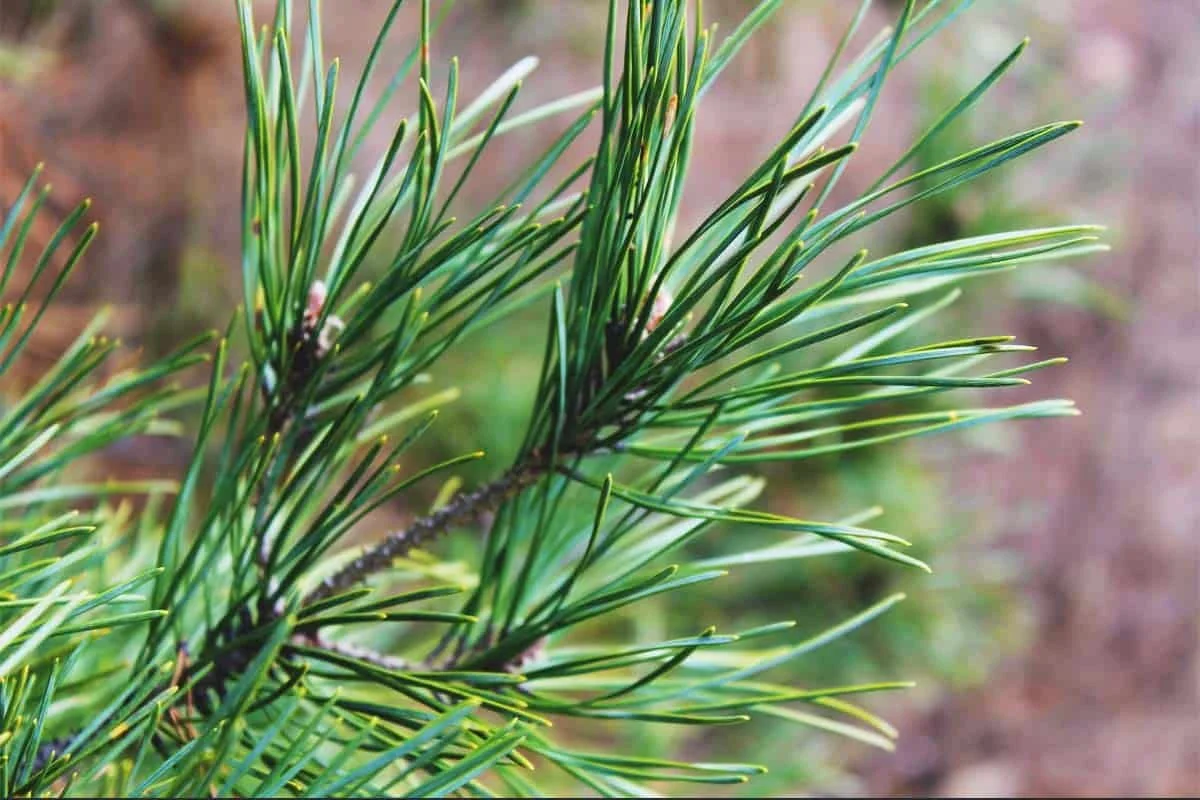
Pine needles are among the most familiar plant materials in northern landscapes, yet their usefulness is often overlooked precisely because of their abundance. They form in clusters or bundles, emerging directly from woody branches and remaining green year-round, giving pine trees their evergreen character.
Needles are long, narrow and pointed, ranging in colour from deep green to blue-green depending on species. When crushed, they release a sharp, resinous aroma that feels clean and expansive, carrying both brightness and depth. This scent is one of pine’s defining characteristics and signals the presence of volatile compounds concentrated within the needles.
Different pine species produce needles in varying lengths and bundle numbers, but their overall form remains consistent: resilient, aromatic and built for endurance.
Pine needles typically appear as:
Long, narrow, pointed evergreen needles
Bundles of two, three or five needles depending on species
Strong resinous aroma when crushed
Flexible yet tough texture
Persistent green colour through winter
They are most commonly confused with:
Spruce or fir needles, which are attached singly rather than in bundles
Yew needles, which are flat and highly toxic
Correct identification of pine species is essential before use.
Habitat, Growth & Ecology
Many pine species are native to the UK, while others have been widely planted and naturalised. Pines thrive in poor, acidic soils and exposed environments where other trees struggle, making them key species in upland, coastal and managed forest landscapes.
Ecologically, pine trees provide year-round shelter for wildlife, stabilise soil and contribute to long-term forest structure. Needles fall continuously, creating acidic leaf litter that shapes understory plant communities.
Pine needles reflect longevity rather than speed. Their chemistry is shaped by survival through cold, wind and limited nutrients.
History, Tradition & Cultural Use
Pine needles have a long history of use across northern Europe, Asia and Indigenous cultures of North America. Historically, they were valued for their availability through winter, when fresh green plant material was otherwise scarce.
They were commonly prepared as teas, steams and washes, used to support respiratory comfort, circulation and general vitality. Pine needle tea was often taken seasonally rather than continuously, particularly during colder months.
Pine needles were also used externally, added to baths or bedding, reflecting their aromatic and warming qualities. Their role was supportive rather than dramatic, integrated into daily life rather than ritualised medicine.
Myth, Lore & Symbolism
Evergreen trees have long symbolised continuity and endurance. Pine needles, remaining green through winter, became associated with persistence and protection.
In many cultures, evergreen boughs were brought into the home during winter months, believed to refresh stagnant air and protect against illness. This practice reflected both symbolic belief and lived experience: pine’s scent felt cleansing, expansive and enlivening during periods of enclosure.
Pine needles thus became symbols of resilience and breath, linking human survival with forest presence.
Areas of Scientific Research Interest
Modern scientific interest in pine needles has focused on their vitamin content, volatile oils and antioxidant compounds. Research often examines extracts and essential oils rather than whole-needle preparations.
Pine-derived compounds are used in modern respiratory, cosmetic and aromatic products, reflecting continuity with traditional applications.
Respiratory and Volatile Oil Research
Studies suggest pine needle compounds may:
Support respiratory comfort through aromatic interaction
Influence airway sensation and airflow perception
Interact with microbial environments in laboratory settings
These findings help explain pine’s long-standing use in steams and inhalations.
Antioxidant Research
Pine needles contain polyphenols and flavonoids that have been studied for antioxidant activity, contributing to interest in their role in cellular protection.
Nutritional Profile: Vitamins & Minerals
Pine needles are nutritionally active, particularly when used as a tea.
Reported constituents include:
Vitamin C - supports immune function, collagen production and connective tissue health
Vitamin A (carotenoids) - supports vision, skin integrity and mucous membranes
Iron (trace) - supports oxygen transport and energy production
Calcium - supports bone health and muscle function
Magnesium - supports nervous system regulation and muscle relaxation
Chlorophyll - supports detoxification pathways and cellular health
Volatile oils - contribute to respiratory and sensory effects
Their nutritional value is most relevant in seasonal use rather than daily consumption.
Traditional Use vs Modern Research
Traditional use of pine needles was shaped by season and necessity. People reached for pine when other green plants were unavailable. Effects were judged by felt experience: breath felt clearer, energy lifted, air felt cleaner.
Modern research isolates compounds and examines antioxidant and antimicrobial activity. While this offers useful explanation, it can obscure the contextual nature of traditional use, which emphasised aroma, warmth and repetition rather than measurable outcomes.
Where both frameworks align is in recognising pine needles as supportive rather than curative. Where they diverge is in expectation. Pine was never intended as a concentrated intervention.
Preparation & Practical Use
Pine needles have always been prepared in ways that respect their volatile oils. Excessive heat or prolonged boiling diminishes their character, shaping preparation methods that prioritise gentle extraction.
Preparation emphasised freshness, aroma and warmth.
Teas & Infusions
Common preparations include:
Light teas made from fresh or gently dried needles
Short steep times rather than long decoctions
These teas are resinous, bright and mildly astringent.
Steams and External Use
Pine needles have also been used in:
Steam inhalations for respiratory comfort
Baths and washes for circulation and warmth
These applications rely on aroma rather than ingestion.
Ethical Harvesting & Stewardship
Pine needle harvesting should be minimal and respectful.
Responsible practice includes:
Harvesting small amounts from many trees
Taking needles from lower branches only
Avoiding damage to growing tips
Harvesting away from polluted roadsides
Confirming species identity before use
Evergreens grow slowly and should never be stripped.
Safety & Considerations
Pine needles are generally safe when correctly identified, but caution is essential.
Considerations include:
Avoiding toxic species such as yew
Moderation in internal use
Awareness that some pine species are not suitable for ingestion
Avoiding use during pregnancy unless species is confirmed safe
Traditional use relied on familiarity with local trees.
How We Work With Pine Needles at KindRoots
At KindRoots, pine needles are treated as a seasonal, aromatic support rather than a daily tonic.
We work with pine needles primarily in teas, steams and occasional external preparations, particularly during colder months when respiratory support and brightness are welcome. They may also appear in blends where resinous, uplifting qualities are appropriate.
Our approach prioritises careful identification, light preparation and seasonal use, allowing pine needles to offer clarity and warmth without excess.
Pine needles are used seasonally in our own practice and appear in a limited number of our preparations.
Closing Note
Pine needles remind us that resilience does not always look soft. Sometimes it is sharp, aromatic and persistent, holding green through the hardest months.
To work with pine needles is to acknowledge the quiet strength of evergreens. They offer support not by changing the season, but by helping us breathe more fully within it.
