
Pine Cones ‘Pinus spp’
Identification & Appearance
Pine cones are among the most recognisable structures in temperate forests, yet they are rarely considered as useful plant material in their own right. Formed as the reproductive bodies of pine trees, cones appear woody, layered and architectural, their overlapping scales arranged with precise symmetry.
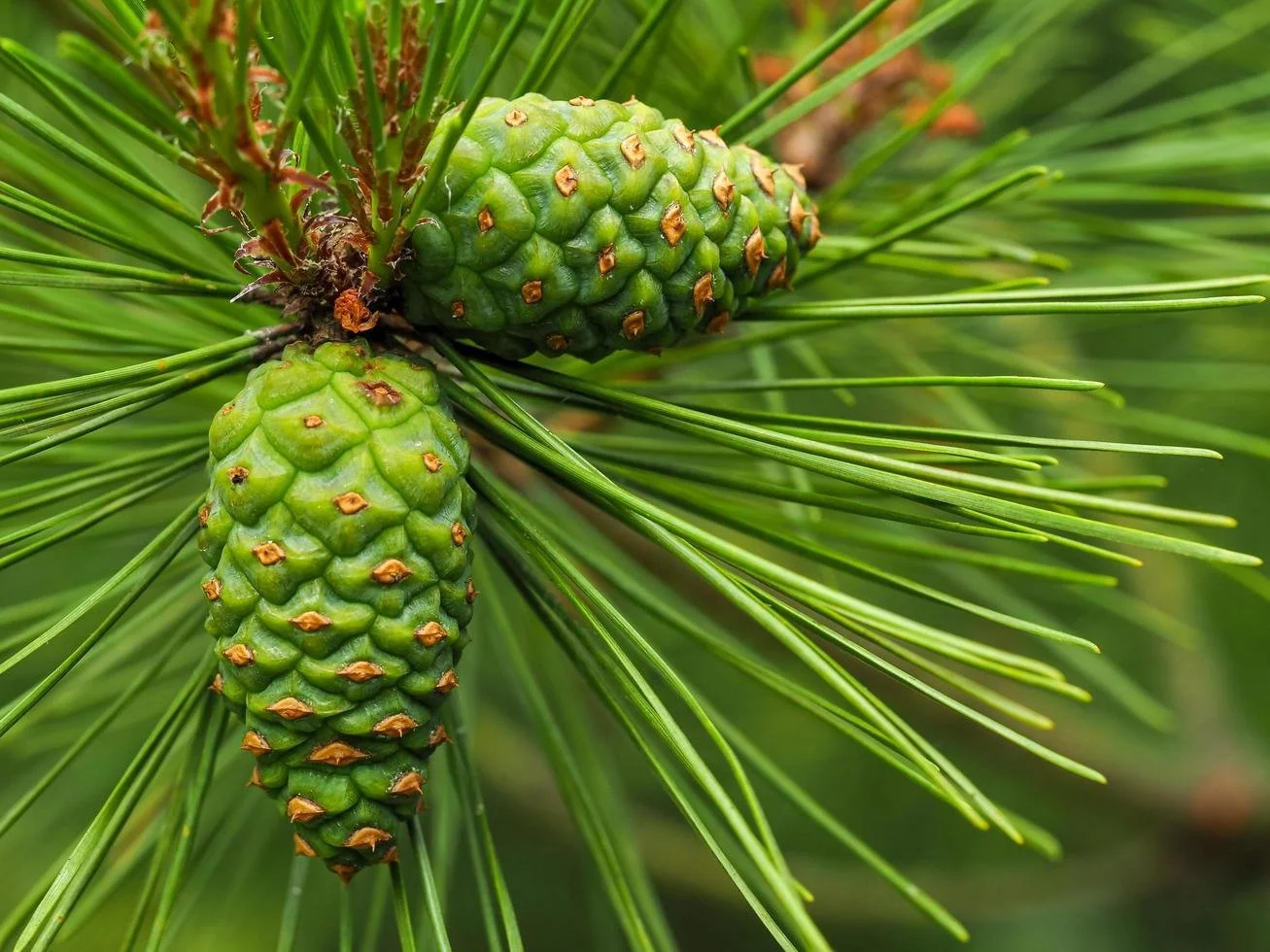
Young pine cones are green, soft and resinous, often sticky to the touch and heavy with aromatic compounds. As they mature, they harden and darken, becoming woody and opening gradually to release seeds. This shift from soft and resinous to dry and structural marks an important distinction in how cones have been traditionally used.
Pine cones vary widely in size and shape depending on species, but all share a dense, resin-rich interior when young and a tough, protective exterior when mature.
Pine cones typically appear as:
Woody, layered structures composed of overlapping scales
Green and resinous when young, brown and dry when mature
Attached singly or in small clusters
Aromatic, especially when fresh or warmed
Firm and heavy relative to size
They are most commonly confused with:
Spruce cones, which are thinner and more flexible
Fir cones, which grow upright and disintegrate on the tree
Correct identification of pine species remains important.
Habitat, Growth & Ecology
Pine trees are widespread across the UK, including both native and long-established planted species. Pine cones develop over extended periods, often taking multiple seasons to mature fully.
Ecologically, pine cones play a central role in forest regeneration. They protect seeds through harsh conditions, releasing them only when environmental cues such as dryness or warmth signal opportunity. Resin within young cones acts as a deterrent to pests and microbial activity, preserving viability.
Fallen cones contribute to forest floor structure, moisture retention and slow nutrient cycling. Their presence reflects continuity rather than immediacy.
History, Tradition & Cultural Use
Pine cones have a long history of practical and symbolic use. Historically, young pine cones were gathered for their resinous properties, while mature cones were used as fuel, kindling and material.
In folk traditions, pine cones were incorporated into syrups, preserves and honey infusions, particularly in northern and alpine regions. These preparations were valued as warming, aromatic and supportive during colder months.
Pine cones were not everyday food. They were seasonal materials, gathered intentionally and prepared slowly, often as part of winter stores.
Myth, Lore & Symbolism
Pine cones have carried strong symbolic meaning across cultures. Their spiral structure has long been associated with growth, continuity and latent potential. In architecture and art, pine cones have represented fertility, protection and the promise of renewal.
In domestic tradition, pine cones were often kept indoors as winter decorations or used in hearth fires, reinforcing their association with warmth, shelter and endurance. Their symbolism reflects patience and containment - energy held in reserve until conditions are right.
Areas of Scientific Research Interest
Modern scientific interest in pine cones has focused on their resin content, phenolic compounds and antimicrobial properties. Research often examines extracts from young cones rather than mature woody structures.
Pine-derived resins and compounds are widely used in modern pharmaceutical, cosmetic and industrial applications, reflecting continuity with traditional uses.
Antimicrobial and Resin Research
Studies suggest pine cone resins contain compounds that:
Inhibit microbial growth in laboratory settings
Contribute to preservation and protective effects
Support topical applications
These findings align with historical use of pine resins in salves and syrups.
Antioxidant Research
Pine cone extracts contain polyphenols that have been studied for antioxidant activity, contributing to interest in their role in cellular protection.
Nutritional Profile: Vitamins & Minerals
Pine cones are not consumed for nutrition in the conventional sense, but young cones contain bioactive compounds that contribute to functional preparations.
Reported constituents include:
Polyphenols - support antioxidant activity and cellular protection
Resin acids - contribute to antimicrobial and preservative properties
Trace minerals - support biochemical activity
Volatile oils - contribute to aroma and respiratory support
Their value lies in chemistry rather than caloric contribution.
Traditional Use vs Modern Research
Traditional use of pine cones was shaped by material properties rather than nutritional value. People observed that preparations made from young cones were warming, aromatic and preservative. These effects guided use without explanation.
Modern research isolates resins and phenolic compounds, examining antimicrobial and antioxidant activity. While this provides useful insight, it risks disconnecting pine cones from their seasonal and material context.
Where both frameworks align is in recognising pine cones as protective rather than nourishing. Where they differ is in expectation. Pine cones were never used as daily food.
Preparation & Practical Use
Pine cones have always required deliberate preparation. Their usefulness lies in slow extraction rather than immediacy, particularly when working with young cones.
Preparation emphasised warmth, time and containment.
Syrups, Honeys & Decoctions
Traditional preparations include:
Pine cone syrup made from young cones
Honey infusions drawing out resin and aroma
Long-simmered decoctions for aromatic use
These preparations are resinous, warming and persistent.
External and Domestic Use
Pine cones have also been used as:
Aromatic fuel or kindling
Additions to baths or steams
Sources of resin for salves
These uses reflect their material versatility.
Ethical Harvesting & Stewardship
Pine cone harvesting should be minimal and intentional.
Responsible practice includes:
Harvesting only young cones when appropriate
Taking small numbers from any one tree
Avoiding damage to branches and buds
Leaving the majority of cones for natural regeneration
Harvesting away from polluted areas
Overharvesting cones can reduce seed availability.
Safety & Considerations
Pine cone preparations require care.
Considerations include:
Correct species identification
Moderation in internal use
Awareness that resins can irritate sensitive digestion
Avoiding use during pregnancy unless species is confirmed safe
Traditional use relied on familiarity and restraint.
How We Work With Pine Cones at KindRoots
At KindRoots, pine cones are treated as a seasonal, resin-rich material rather than a staple ingredient.
We work with pine cones primarily in syrups, honeys and occasional aromatic preparations, valuing their warming and preservative qualities. They may also appear in external products where resinous protection is appropriate.
Our approach prioritises careful harvesting, slow preparation and respect for pine’s reproductive role, allowing pine cones to remain what they have always been: contained energy, released gradually.
Pine cones are gathered and used selectively in our own practice and appear in a small number of our preparations.
Closing Note
Pine cones hold patience in physical form. They protect potential rather than expressing it immediately.
To work with pine cones is to engage with stored warmth and delayed release. They remind us that some forms of strength are not active, but held quietly until the moment arrives to open.
