
Cacao ‘Theobroma cacao’
Identification & Appearance
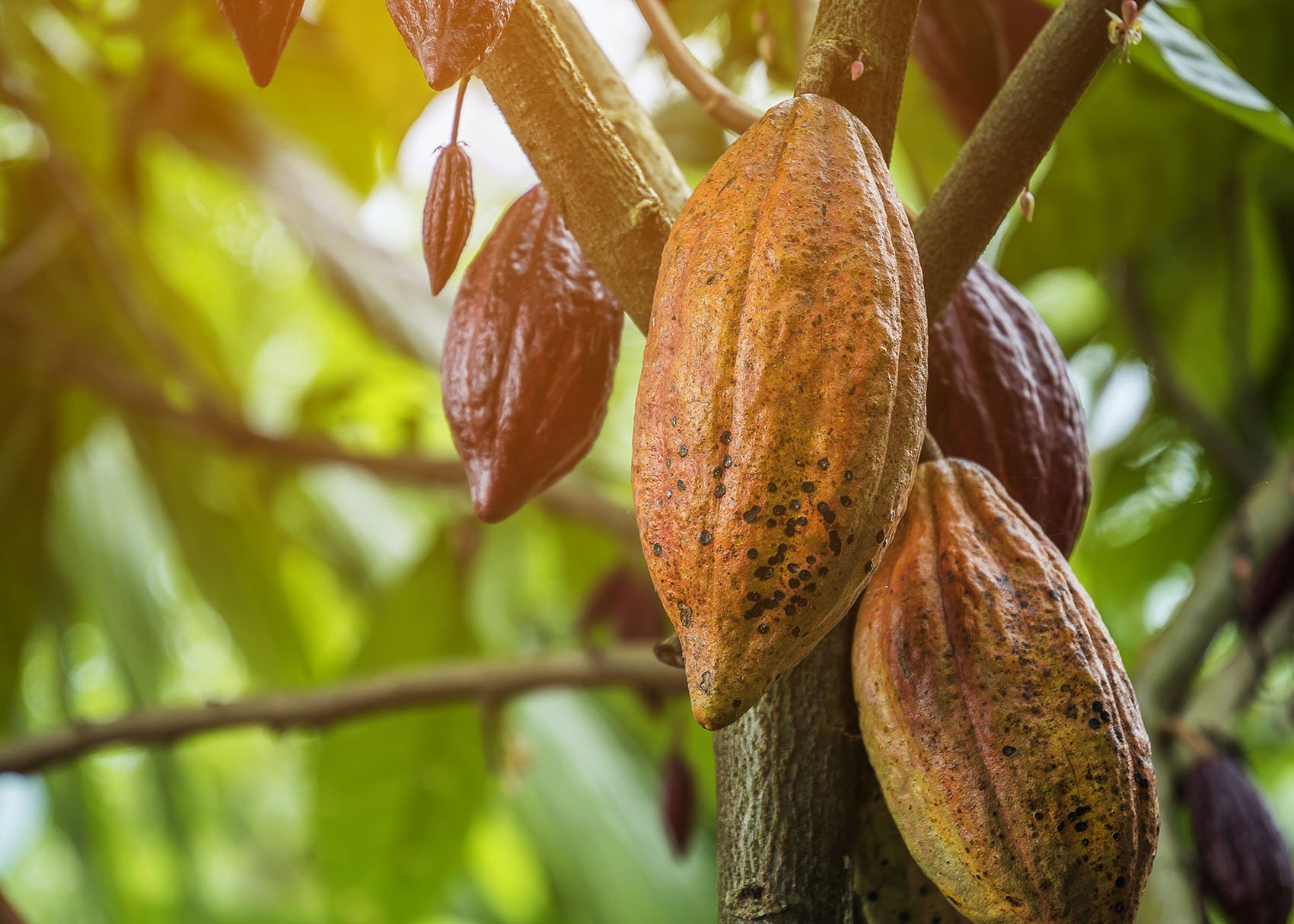
Raw cacao comes from the seeds of the cacao tree, a small evergreen native to tropical rainforest environments. Unlike many plants in this guide, cacao does not present itself as a wild hedgerow or woodland species, but as a cultivated tree whose fruits develop directly from the trunk and larger branches.
The cacao pod is oval and ridged, thick-skinned and heavy, shifting in colour from green to yellow, red or purple depending on variety and ripeness. Inside, the pod holds rows of pale seeds surrounded by sweet, mucilaginous pulp. These seeds are what become cacao once fermented, dried and minimally processed.
Raw cacao appears not as a plant in the field, but as a material shaped by careful post-harvest handling. Its final form retains a deep, earthy bitterness beneath subtle fruit and floral notes, reflecting both the tree and the fermentation process.
Raw cacao typically appears as:
Whole cacao beans with a dark brown exterior
Nibs, created by breaking and removing husks
Powder ground from unroasted or lightly processed beans
A strong, bitter, complex aroma
Unlike roasted chocolate, raw cacao retains a sharper, more mineral and less sweet profile.
Habitat, Growth & Ecology
Cacao is native to the tropical regions of Central and South America and is not native to the UK. It grows in humid rainforest environments under canopy cover, requiring consistent warmth, moisture and rich soil.
Ecologically, cacao trees are part of diverse forest systems. Traditionally, cacao was grown in agroforestry settings alongside other plants, supporting biodiversity and soil health. Modern monoculture farming has disrupted this balance in some regions, making ethical sourcing especially important.
Cacao’s relationship to ecology is inseparable from human cultivation practices rather than wild availability.
History, Tradition & Cultural Use
Cacao has a long cultural history rooted in Mesoamerican civilisations. Historically, it was valued not as a confection but as a ceremonial and medicinal plant. Cacao was consumed as a bitter drink, often combined with spices and water, and used in ritual, social and spiritual contexts.
It was associated with vitality, heart opening and communal connection. Rather than being eaten casually, cacao was prepared intentionally and consumed in specific settings, reflecting its perceived potency.
After colonisation, cacao’s role shifted dramatically, becoming sweetened, processed and commercialised. Raw cacao represents an attempt to reconnect with earlier forms of use, retaining bitterness and complexity rather than masking it.
Myth, Lore & Symbolism
Cacao has long been associated with the heart, both physically and symbolically. In Indigenous traditions, it was seen as a plant that fostered connection, clarity and emotional openness.
Its ceremonial role linked it with community, communication and balance. These symbolic associations arose from experience rather than doctrine, shaped by how cacao made people feel in shared spaces.
While modern narratives sometimes exaggerate these qualities, cacao’s symbolic role as a connector remains grounded in cultural memory.
Areas of Scientific Research Interest
Modern scientific interest in cacao has focused on its flavonoid content, stimulant compounds and interaction with cardiovascular, neurological and metabolic systems. Research often examines cocoa extracts rather than whole ceremonial preparations.
Cacao compounds are widely studied due to their dietary relevance and accessibility.
Cardiovascular and Circulatory Research
Studies suggest cacao flavonoids may:
Support normal blood vessel function
Influence nitric oxide pathways
Contribute to circulatory health
These findings help explain cacao’s long-standing association with the heart.
Neurological and Mood Research
Cacao contains compounds such as theobromine and phenylethylamine, which have been studied for their interaction with mood and alertness. Research suggests cacao may influence neurotransmitter activity, contributing to feelings of focus and wellbeing.
Nutritional Profile: Vitamins & Minerals
Raw cacao is nutritionally dense compared to many plant materials, particularly in mineral content.
Reported constituents include:
Magnesium - supports nervous system regulation, muscle relaxation and energy metabolism
Iron - supports oxygen transport and energy production
Calcium - supports bone health and muscle function
Potassium - supports fluid balance and heart rhythm
Zinc - supports immune function and cellular repair
Copper - supports iron metabolism and connective tissue health
Flavonoids - contribute to antioxidant and cardiovascular research interest
Theobromine - contributes to gentle stimulation without sharp peaks
Its nutritional profile supports both physical and cognitive vitality when used appropriately.
Traditional Use vs Modern Research
Traditional use of cacao was ceremonial, communal and intentional. It was consumed slowly, in specific contexts, and often accompanied by ritual. Effects were understood holistically rather than in terms of isolated outcomes.
Modern research isolates cacao’s compounds and examines specific physiological effects. While this offers useful insight, it risks reducing cacao to a functional supplement rather than a culturally embedded plant.
Where the two frameworks align is in recognising cacao as stimulating and heart-associated. Where they diverge is in context. Traditional use emphasised intention and moderation; modern use often prioritises quantity and effect.
Understanding cacao requires holding both perspectives without flattening either.
Preparation & Practical Use
Raw cacao has always been prepared with care. Its bitterness and potency mean it benefits from thoughtful preparation rather than casual use.
Preparation emphasises warmth, blending and balance rather than extraction.
Drinks and Ceremonial Use
Traditional-style preparations include:
Warm cacao drinks blended with water or plant milk
Light sweetening or spicing rather than sugar-heavy processing
These preparations retain cacao’s complexity and avoid overstimulation.
Culinary Use
Raw cacao is also used in:
Smoothies
Energy foods
Desserts where bitterness is preserved rather than masked
Culinary use should respect cacao’s intensity.
Ethical Harvesting & Stewardship
Cacao stewardship depends heavily on sourcing.
Responsible practice includes:
Supporting agroforestry and shade-grown cacao
Avoiding exploitative labour practices
Prioritising organic and fair trade sources
Minimising overprocessing
Ethical cacao is as much about human systems as environmental ones.
Safety & Considerations
Raw cacao is potent and should be used with awareness.
Considerations include:
Stimulant effects due to theobromine
Potential sensitivity in those prone to anxiety
Interaction with certain medications
Moderation during pregnancy
Traditional use emphasised intentional, occasional consumption rather than daily intake.
How We Work With Raw Cacao at KindRoots
At KindRoots, raw cacao is treated as a grounding yet stimulating food rather than a supplement.
We work with raw cacao primarily in drinks and blended preparations where its bitterness, mineral richness and gentle stimulation can be balanced thoughtfully. It may also appear in products where nourishment and enjoyment overlap, without stripping cacao of its character.
Our approach prioritises ethical sourcing, minimal processing and mindful use, allowing cacao to remain a plant of depth rather than excess.
Cacao is used intentionally in our own practice and appears in a small number of our preparations where its traditional role suits ritual and daily use.
Closing Note
Raw cacao carries weight. It asks to be prepared, shared and received with attention.
To work with cacao is to engage with contrast - bitterness and warmth, stimulation and grounding, individuality and connection. It reminds us that nourishment can be complex, and that some plants offer not comfort alone, but relationship.
