
Raspberry Leaf ‘Rubus idaeus’
Identification & Appearance
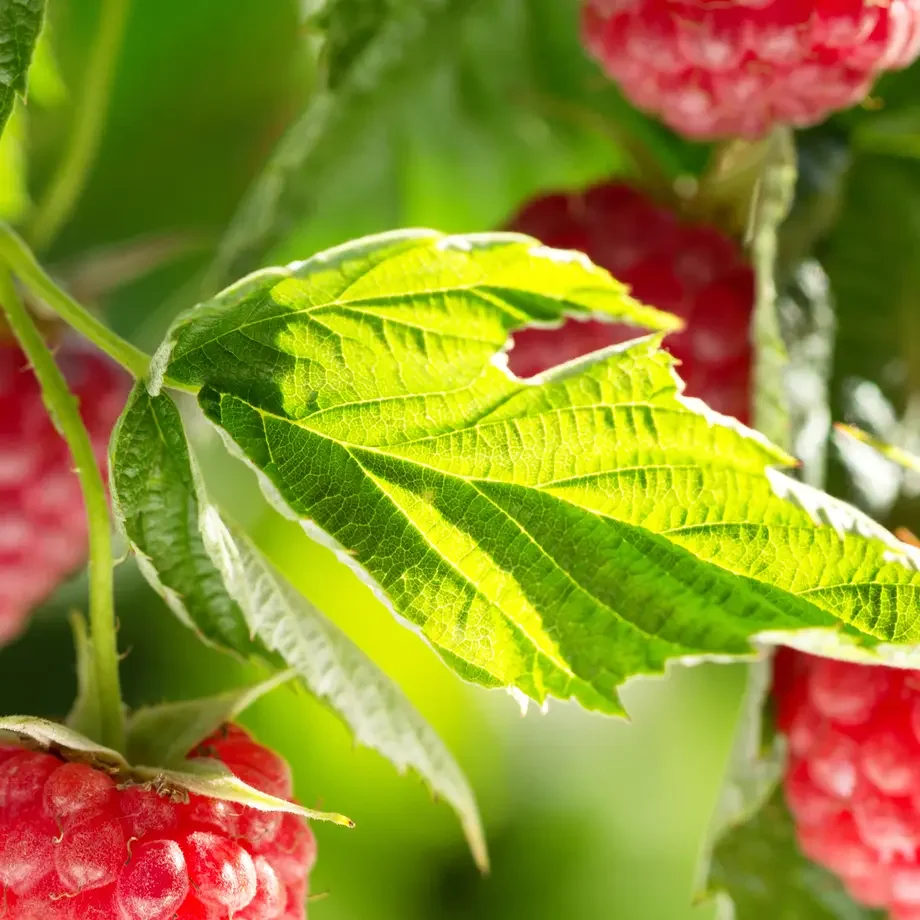
Raspberry leaf belongs to a plant most people recognise for its fruit rather than its foliage. Yet the leaves themselves carry a distinct presence - soft, textured and quietly robust. They grow in groups of three to five leaflets, each leaflet oval with serrated edges and a slightly wrinkled surface. The underside of the leaf is pale and softly downy, giving it a gentle, almost velvety feel when handled.
The plant forms arching canes that may be upright or trailing, depending on variety and environment. In spring and early summer, delicate white flowers appear, later giving way to the familiar red fruit. While the berries draw attention, the leaves persist steadily through the growing season, offering a different kind of usefulness.
Raspberry leaf typically appears as:
Compound leaves with three to five serrated leaflets
Soft, slightly hairy leaf undersides
Upright or arching thorned canes
White flowers followed by red aggregate fruit
Strong, fibrous leaf texture
It is most commonly confused with:
Bramble leaves, which are rougher and more aggressively thorned
Other Rubus species with similar leaf shape
Leaf texture and plant habit help distinguish raspberry.
Habitat, Growth & Ecology
Raspberry is native to the UK and widespread across Europe. It thrives in hedgerows, woodland edges, clearings and disturbed ground, often appearing where light reaches the forest floor.
Ecologically, raspberry plays a supportive role in transitional landscapes. It provides food for insects, birds and mammals, stabilises soil and contributes to early succession. Its presence reflects balance rather than dominance, often giving way as woodland matures.
Raspberry plants respond well to pruning and harvesting, regenerating readily when managed thoughtfully.
History, Tradition & Cultural Use
Raspberry leaf has a long history of use in European folk herbalism, particularly in relation to women’s health. Traditionally, it was valued not as a stimulant or quick remedy, but as a tonic herb used over time to support strength, tone and resilience.
Historically, raspberry leaf was used during pregnancy, menstruation and recovery, often taken as a regular tea rather than for acute symptoms. It was also used more broadly for digestive comfort and general nourishment, reflecting its gentle, astringent nature.
Raspberry leaf belonged to long-term routines. It was trusted because it could be taken repeatedly without disruption.
Myth, Lore & Symbolism
Raspberry has been symbolically associated with nourishment and continuity. Its ability to feed people year after year, returning reliably after pruning and disturbance, linked it with ideas of endurance and maternal care.
In folk understanding, raspberry leaf became associated with preparation rather than intervention - a plant that helped the body be ready rather than pushing it toward change. Its symbolism reflects steadiness, patience and quiet strength.
Areas of Scientific Research Interest
Modern scientific interest in raspberry leaf has focused on its tannin content, flavonoids and interaction with smooth muscle tissue. Research explores both traditional reproductive use and broader anti-inflammatory and antioxidant activity.
Raspberry leaf is widely included in modern herbal teas and formulations, particularly those aimed at menstrual and pregnancy support.
Uterine and Smooth Muscle Research
Studies suggest raspberry leaf may:
Influence tone of smooth muscle tissue
Support rhythmic muscular activity
Interact with uterine tissue responsiveness
These findings help explain its traditional use in preparation rather than stimulation, though research remains cautious and context-dependent.
Antioxidant and Anti-inflammatory Research
Laboratory studies indicate raspberry leaf contains compounds that:
Contribute to antioxidant activity
Interact with inflammatory pathways
Support tissue resilience
These findings align with its broader tonic reputation.
Nutritional Profile: Vitamins & Minerals
Raspberry leaf is more nutritionally active than many herbal leaves, particularly when used as a regular tea.
Reported constituents include:
Iron - supports oxygen transport and energy production
Calcium - supports bone health and muscle contraction
Magnesium - supports nervous system regulation and muscle relaxation
Potassium - supports fluid balance and muscle function
Vitamin C - supports immune function and connective tissue health
B vitamins (trace) - support energy metabolism
Tannins - contribute to astringent and tissue-toning effects
Flavonoids - support antioxidant activity
Its nutritional contribution supports its traditional use as a long-term tonic.
Traditional Use vs Modern Research
Traditional use of raspberry leaf emphasised patience and preparation. It was not taken to force outcomes, but to support the body’s own processes over time. Effects were understood through consistency rather than immediacy.
Modern research seeks to explain these outcomes through muscle tone and biochemical interaction. While this provides useful insight, it risks oversimplifying a plant whose value lies in how it behaves across weeks or months.
Where both frameworks align is in recognising raspberry leaf as supportive rather than corrective. Where they diverge is in expectation. Raspberry leaf was never intended to act quickly.
Preparation & Practical Use
Raspberry leaf has always been prepared in ways that support long-term use. Its fibrous structure lends itself well to drying and infusion, making it suitable for regular tea consumption.
Preparation emphasised reliability and ease rather than complexity.
Teas & Infusions
The most common preparation includes:
Dried leaf infused as a tea
Longer steep times to extract minerals and tannins
These teas are mildly astringent, earthy and grounding.
Blended and Supportive Use
Raspberry leaf has often been combined with other herbs, particularly those supporting menstrual comfort or digestion. Its role in blends is usually structural rather than dominant.
Ethical Harvesting & Stewardship
Raspberry leaf harvesting should prioritise plant health and regeneration.
Responsible practice includes:
Harvesting leaves without damaging fruiting canes
Avoiding overharvesting during flowering and fruiting
Taking leaves from established plants
Harvesting away from polluted areas
Thoughtful harvesting supports both plant longevity and wildlife.
Safety & Considerations
Raspberry leaf is generally well tolerated, but context matters.
Considerations include:
Traditional use in pregnancy should follow informed guidance
Moderation is appropriate, particularly early in pregnancy
Astringent properties may aggravate dryness if overused
Traditional use relied on timing and familiarity rather than blanket application.
How We Work With Raspberry Leaf at KindRoots
At KindRoots, raspberry leaf is treated as a steady, structural herb.
We work with raspberry leaf primarily in teas and blended formulations, particularly where long-term support and gentle toning are appropriate. It is valued for its mineral content and its ability to be used consistently without overstimulation.
Our approach prioritises well-dried leaf, thoughtful sourcing and regular use, allowing raspberry leaf to support the body gradually and reliably.
Raspberry leaf is used steadily in our own practice and appears in a small number of our preparations.
Closing Note
Raspberry leaf does not rush outcomes. It prepares the ground quietly, strengthening systems so that change can happen with less strain.
To work with raspberry leaf is to trust the slow accumulation of support. It reminds us that resilience is often built not through intervention, but through consistent care applied long before it is urgently needed.
