
Calendula ‘Calendula officinalis’
Identification & Appearance
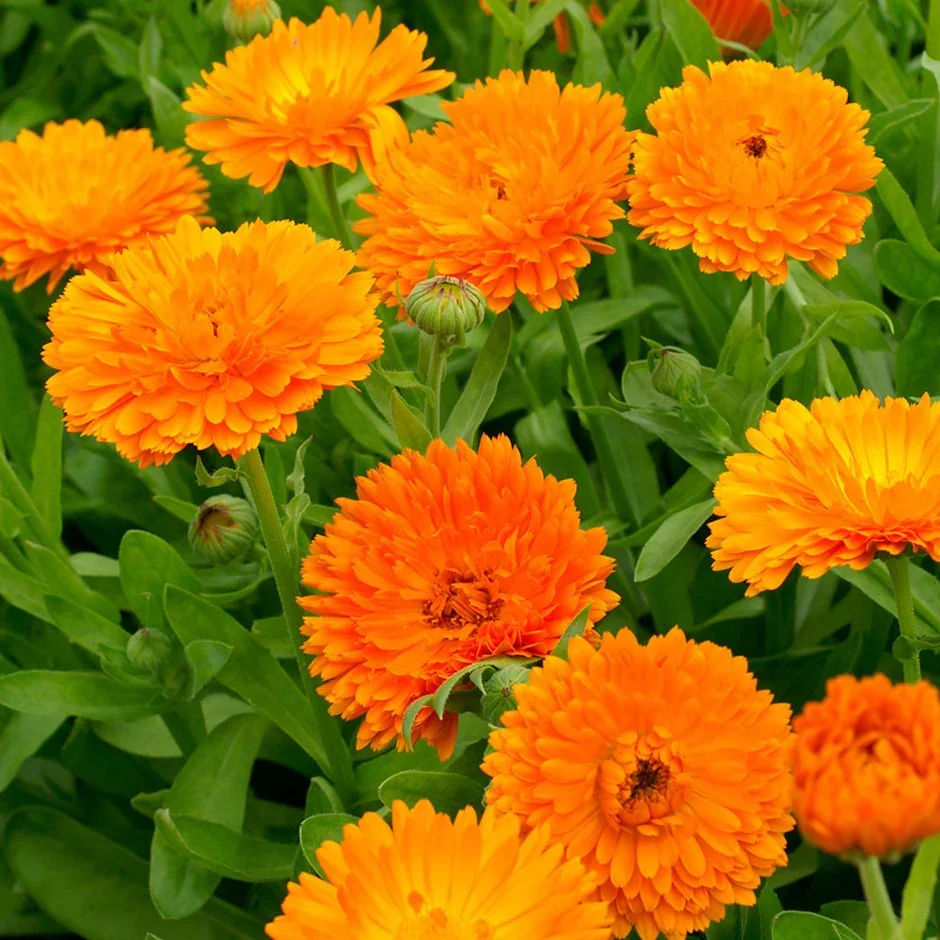
Calendula announces itself through colour. Its bright orange and golden flowers sit open and receptive, turning subtly toward the sun and closing as light fades. Unlike ornamental blooms bred purely for display, calendula carries a sense of purpose - a flower that looks useful as well as beautiful.
The plant grows low and branching, with soft, slightly sticky leaves and sturdy stems. The flowers are composite, daisy-like heads made up of layered petals that feel dry and resinous when handled. Calendula blooms generously across a long season, responding enthusiastically to regular picking.
Calendula typically appears as:
Bright orange or golden-yellow composite flowers
Resinous, slightly sticky petals
Soft, grey-green leaves
Low, branching growth habit
Flowers that open and close with light
It is most commonly confused with:
Tagetes (French or African marigolds), which have a sharper scent, different chemistry and are not interchangeable
Habitat, Growth & Ecology
Calendula is not native to the UK, originating in southern Europe, but has been cultivated here for centuries. Its long presence in gardens and monastic spaces has woven it into domestic herbal tradition despite its non-native status. It thrives in well-drained soil and benefits from regular harvesting, which encourages continuous flowering.
Ecologically, calendula supports pollinators and brings extended colour into cultivated environments. It is a plant shaped by care - flourishing where people tend, harvest and return.
History, Tradition & Cultural Use
Calendula has long been a household healing plant, valued not for dramatic effects but for steady reliability. It featured prominently in monastic gardens and domestic stillrooms, where petals were gathered regularly and infused into oils, fats and broths.
Historically, calendula was used both externally and internally, though its strongest association has always been with skin. It appeared in salves for cuts and irritations, washes for inflamed tissue, and gentle preparations taken to support recovery over time.
Calendula belonged to the rhythm of daily maintenance - a plant used often, gently and without urgency.
Myth, Lore & Symbolism
Calendula’s symbolism follows the sun. Its opening and closing with light made it a natural marker of time and rhythm, associated with continuity and gentle protection.
In everyday tradition, calendula was planted near doorways and paths, its bright colour believed to bring warmth and clarity into lived spaces. Its meaning arose less from story than from repetition: a flower that returned again and again, responding to care.
Areas of Scientific Research Interest
Modern scientific interest in calendula has developed primarily from its long-standing topical use for skin support and inflammation modulation. Research has focused on understanding how calendula interacts with skin tissue, wound environments and inflammatory pathways.
Calendula extracts are now widely used in modern dermatological and cosmetic products, representing one of the clearest continuations of traditional herbal use into contemporary application. Much of the research explores topical preparations rather than internal use.
Skin & Wound Research
Studies suggest calendula may:
Support healthy wound environments
Modulate inflammatory response in skin tissue
Encourage tissue repair processes
These findings broadly align with traditional external use, particularly in slow-healing or irritated skin contexts.
Antimicrobial Research
Laboratory research has identified antimicrobial activity in calendula extracts, particularly relevant to topical applications. These results help explain its historical use in washes and salves, though they do not imply standalone treatment.
Nutritional Profile: Vitamins & Minerals
Calendula is not consumed primarily for nutrition, but it contains compounds that support general bodily function.
Reported constituents include:
Carotenoids (vitamin A precursors) - support skin integrity, epithelial repair and cellular protection
Flavonoids - support antioxidant activity and tissue resilience
Resins and volatile compounds - contribute to calendula’s interaction with skin and local tissue environments
Calendula’s nutritional contribution is secondary to its topical chemistry, but these constituents help explain its long-standing relationship with skin repair and maintenance.
Traditional Use vs Modern Research
Traditional use of calendula was shaped by observation rather than explanation. People did not describe calendula as anti-inflammatory or antimicrobial. They described what happened when it was used regularly. Skin calmed. Wounds closed more cleanly. Irritation softened over time.
Calendula was never treated as an acute or aggressive intervention. It was applied gently, often and patiently, particularly where the body was already compromised or slow to heal. Its value lay in how reliably it supported recovery without provoking further irritation.
Modern research approaches calendula from a different direction. Instead of observing outcomes over time, studies isolate compounds and examine how they behave in controlled environments. Research into calendula focuses on skin tissue response, inflammatory signalling, microbial environments and wound-healing conditions.
Where the two frameworks align most clearly is in emphasis on gentleness and consistency. Modern findings support calendula’s suitability for repeated topical use rather than single, high-intensity application. Where they diverge is in scale and intention. Laboratory studies often examine concentrated extracts, while traditional use relied on whole-plant preparations applied over time.
Understanding calendula requires holding both perspectives at once. Traditional use provides the shape of how the plant works in real life; modern research offers insight into mechanisms without redefining calendula as something it was never meant to be.
Preparation & Practical Use
Calendula has always been worked with slowly. Its usefulness does not come from strength or immediacy, but from how reliably it supports tissue over time. Historically, calendula was not prepared for quick fixes or acute intervention. It was prepared for ongoing care, particularly where skin was damaged, inflamed, slow to heal or repeatedly stressed.
Because its primary value lies in resinous and lipid-soluble compounds found in the petals, calendula lends itself especially well to oil-based preparations. Flowers were gathered regularly, dried carefully and infused over weeks rather than days. Calendula preparations were often kept close at hand, used repeatedly and replenished as part of routine household care.
External Preparations
External use has always been calendula’s central role.
Traditional and practical preparations include:
Infused oils extracted slowly over several weeks
Salves and creams combined with waxes or fats
Washes and compresses made from light infusions
These preparations were applied consistently rather than intensively. Calendula was valued not for dramatic overnight change, but for how skin responded after repeated, gentle application.
Internal Use
Internal use of calendula has historically been secondary and more limited. When taken internally, it was usually prepared as a light infusion, consumed gently and intermittently rather than as a daily tonic.
Ethical Harvesting & Stewardship
Calendula harvesting is generally low-impact but still benefits from care.
Responsible practice includes:
Harvesting flowers regularly to encourage continued blooming
Leaving sufficient flowers for pollinators
Avoiding chemical treatments
Drying petals promptly to preserve quality
Calendula thrives in relationship with human attention.
Safety & Considerations
Calendula is generally considered safe and gentle.
Considerations include:
Potential sensitivity in those allergic to plants in the daisy family
Moderation in internal use
Clear distinction from ornamental marigolds
Traditional use relied on familiarity and repetition rather than intensity.
How We Work With Calendula at KindRoots
At KindRoots, calendula is treated as a foundational skin ally.
We most often work with calendula in infused oils, balms, creams and washes, where its gentle, restorative qualities support skin comfort and repair. Calendula may also appear in barrier preparations and everyday skin products, chosen for reliability rather than force.
Our approach prioritises fresh flowers, slow infusion and repeated use, allowing calendula to work as it always has: gradually and consistently.
Calendula is used regularly in our own practice, particularly where gentle, everyday applications are appropriate, and appears in a number of our preparations.
Closing Note
Calendula asks for patience, not belief. It does not promise transformation, and it does not reward urgency. Instead, it responds to being returned to - day after day, application after application - quietly shaping the conditions in which healing becomes possible.
In a culture that often equates strength with speed, calendula offers a different model of usefulness. Its work is cumulative, relational and gentle, reminding us that repair is not always about intervention, but about creating enough safety for the body to do what it already knows how to do.
Calendula’s value lies not in what it forces, but in what it allows.
