
Ginger ‘Zingiber officinale’
Identification & Appearance
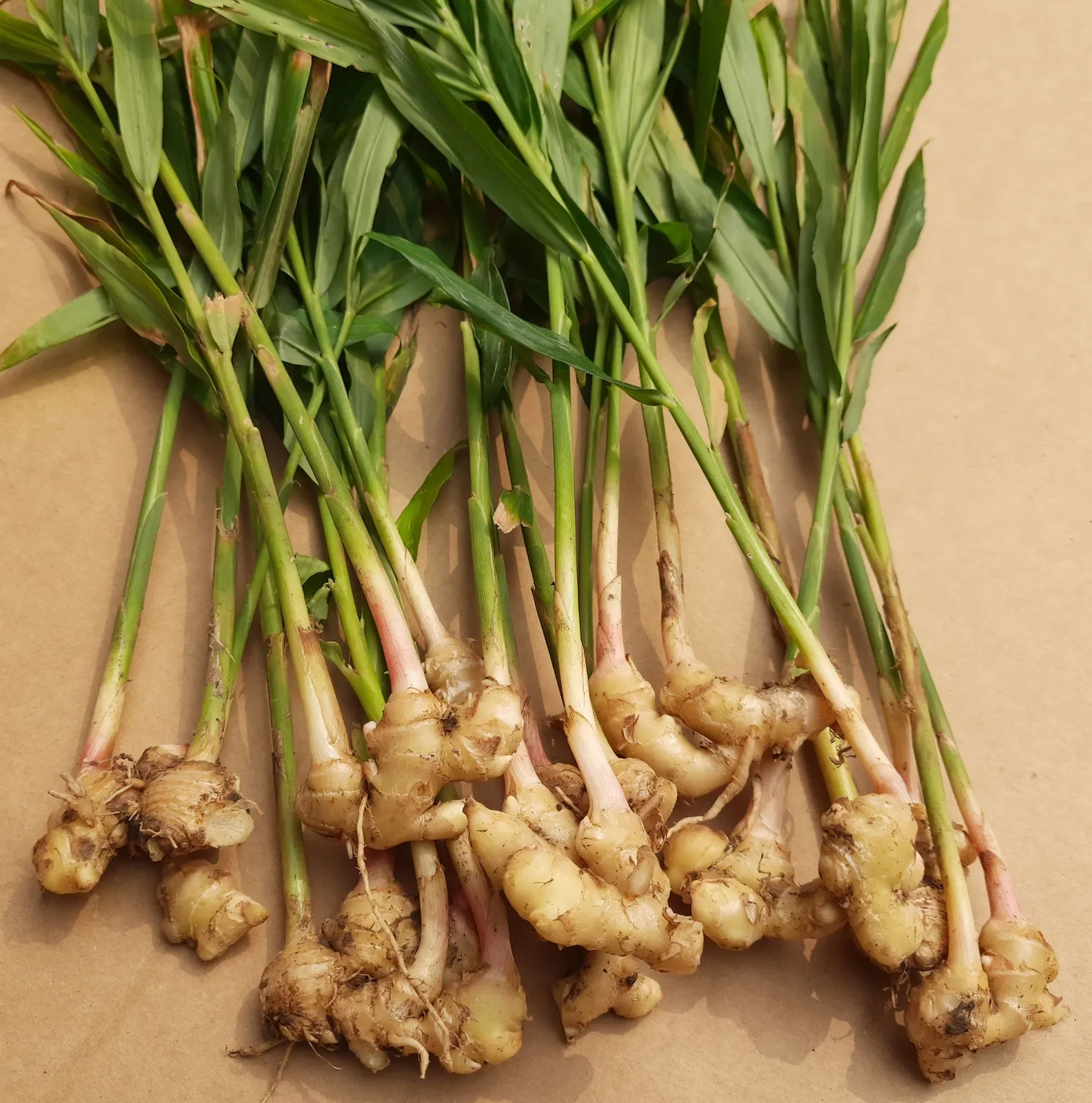
Ginger is most familiar as a warming root in the kitchen, but the plant itself is something many people never see. It grows as a lush, reed-like perennial with long, narrow leaves and a thick underground rhizome that stores its strength below the surface. That hidden growth habit is part of ginger’s character - it is a plant that concentrates its power in what you do not see, then releases it when sliced, crushed or brewed.
The usable part is the rhizome, often called the root. Fresh ginger is pale yellow inside with a thin skin, firm texture and a sharp, aromatic scent that hits immediately when cut. Dried ginger is more muted and rounded, but still unmistakably warming. In both forms, ginger’s identity is sensory as much as visual - spicy, bright, slightly citrusy, and deeply grounding.
Ginger typically appears as:
Knobbly, branching rhizome with pale yellow interior
Thin tan skin on fresh ginger
Strong spicy aroma released when cut or grated
Fibrous texture, especially in older pieces
Warm, pungent taste that builds rather than flashes
It is most commonly confused with:
Galangal, which is more woody and piney and not interchangeable
Turmeric, which is orange inside and more earthy than spicy
Correct identification matters most when working with less common relatives, but culinary ginger is generally straightforward.
Habitat, Growth & Ecology
Ginger is not native to the UK. It originates from tropical and subtropical regions of Asia and is cultivated worldwide. In the UK it is typically grown as a greenhouse or house plant rather than a true outdoor crop, because it needs warmth and a long growing season to form substantial rhizomes.
Ecologically, ginger is a cultivated plant rather than a wild-foraged one in Britain. That changes the stewardship conversation: the emphasis is less on wild habitat impact and more on sourcing, growing conditions and ethical supply chains. As a rhizome crop, ginger is harvested by lifting the plant and removing part or all of the underground growth, then replanting pieces to continue the cycle.
History, Tradition & Cultural Use
Ginger has been used for centuries as both food and medicine across Asia, the Middle East and Europe. Unlike many herbs that live primarily in folk practice, ginger has always been a trade plant - carried, valued and incorporated into daily life far beyond its native range. It sits at the crossroads of kitchen and apothecary, used as readily in meals as in remedies.
Historically, ginger was worked with as a warming ally. It was used to support digestion after heavy or cold meals, to bring circulation back into the body in damp climates, and to steady the stomach during nausea or travel. Ginger appeared in teas, broths, sweets, spiced wines and preserved preparations, often taken regularly through winter or whenever the body felt cold, sluggish or unsettled.
Ginger’s traditional role is not subtle. It was chosen when a person wanted movement - warmth, circulation, digestion, momentum.
Myth, Lore & Symbolism
Ginger’s symbolism is tied to heat, vitality and protection. In many cultures it became a household staple not only because it tasted good, but because it made people feel more resilient in cold seasons and during travel. It was carried as a practical companion, a plant that could be relied on when the body felt vulnerable to chill, motion, damp or depletion.
In everyday tradition, ginger often appears in domestic rituals of care: added to broths for someone recovering, brewed into tea when the stomach is unsettled, or worked into warming sweets and syrups during winter. Its meaning arose from repeated experience - ginger was what you reached for when you wanted to feel more present in your body.
Areas of Scientific Research Interest
Modern scientific interest in ginger has developed from its long-standing use for digestive support and nausea. Research has focused on its pungent compounds, particularly gingerols and shogaols, and how they interact with nausea pathways, inflammation signalling and digestive function.
Unlike many traditional plants, ginger is already integrated into modern healthcare contexts. Ginger preparations are used widely in contemporary self-care and clinical-adjunct settings, particularly for nausea, and ginger-derived compounds are studied as active contributors to its effects. Much research examines extracts or standardised doses rather than culinary amounts, which matters when interpreting results.
Nausea and Antiemetic Research
Studies suggest ginger may:
Reduce nausea intensity in some contexts, particularly when used consistently
Support stomach settling during motion-related or pregnancy-related nausea in some people
Contribute to antiemetic effects through multiple mechanisms rather than sedation
Results vary by dose and preparation, but the overall pattern supports ginger’s long reputation as a stomach-steadying plant.
Digestive and Motility Research
Research has explored ginger in relation to:
Gastric emptying and digestive comfort
Bloating and digestive sluggishness
Findings suggest ginger can support digestive movement and comfort, aligning with traditional use as a warming, mobilising herb.
Inflammation and Pain Research
Ginger compounds have been studied for their interaction with inflammatory pathways. Results suggest ginger may support inflammatory balance over time, particularly as part of regular intake, though outcomes depend on dose and context.
Nutritional Profile: Vitamins & Minerals
Ginger is not used primarily for nutrition, but it contains vitamins, minerals and plant compounds that support general bodily function. Its nutritional contribution is secondary to its warming and digestive effects, but these constituents help explain why it has long been valued as a sustaining, restorative spice.
Reported constituents include:
Vitamin C - supports immune function and cellular repair
Vitamin B6 - supports nervous system function, energy metabolism and normal immune function
Potassium - supports fluid balance, heart rhythm and normal muscle function
Magnesium - supports muscle function, nervous system regulation and energy metabolism
Manganese - supports antioxidant enzyme function and connective tissue formation
Copper - supports iron metabolism and connective tissue maintenance
Iron (trace) - supports oxygen transport and energy production
Gingerols and shogaols - bioactive compounds linked to ginger’s warming sensation and researched effects on nausea and inflammation
Volatile oils - contribute to aroma, sensory impact and digestive character
Traditional Use vs Modern Research
Traditional use of ginger was shaped by felt experience rather than mechanism. People described what changed: cold limbs warmed, digestion woke up, nausea eased, the body felt more mobile and less stuck. Ginger was used when movement and warmth were needed, and it was used in forms that delivered that quickly - fresh slices, hot teas, broths, syrups.
Modern research reframes these observations through compounds and pathways, focusing on gingerols, shogaols and their effects on nausea, motility and inflammation signalling. This provides useful explanatory insight, but it can also narrow ginger into a single use case, most often nausea, when traditional practice saw it as a broader mover and warmer.
Where the two frameworks align is in consistency and dose. Research often finds that ginger works best when taken in appropriate amounts and repeated over time, rather than as a one-off dramatic fix. Where they diverge is in context: traditional use was embedded in food and daily rhythm, while studies often examine concentrated preparations that behave differently from kitchen doses.
Understanding ginger requires holding both perspectives without flattening either. It is both a food and a functional herb, and it loses its character if treated as only one.
Preparation & Practical Use
Ginger has always been prepared in ways that emphasise warmth and movement. Its pungent compounds respond well to heat, crushing and steeping, which is why ginger appears so often in hot drinks and broths across cultures. Preparation is less about preserving delicacy and more about releasing character - coaxing out heat, aroma and digestive momentum.
Because ginger can be used fresh or dried, and because those forms behave differently, traditional practice often matched preparation to need. Fresh ginger is sharper and brighter, commonly used when nausea is present or when a quicker warming effect is desired. Dried ginger is rounder and deeper, often used for sustained warmth and digestive support.
Teas & Infusions
Common preparations include:
Fresh ginger tea - sliced or grated and steeped in hot water
Long-simmered decoctions, especially when combined with other roots or spices
Ginger broths, used as both nourishment and warming support
These forms are practical, fast and easy to repeat daily.
Syrups, Honeys & Culinary Use
Ginger is also prepared as:
Syrups for warming drinks
Infused honeys for gentle daily use
Culinary additions to meals, where regular intake supports ongoing digestion and warmth
Tinctures & Extracts
Ginger can be prepared as tinctures or extracts, offering a more concentrated and consistent form. These are often used where measured intake is preferred or where adding ginger to food is not practical.
Ethical Harvesting & Stewardship
As a cultivated rhizome crop, ginger stewardship focuses on sourcing rather than wild ecology.
Responsible practice includes:
Supporting growers who prioritise soil health and fair labour
Avoiding unnecessary waste of whole rhizomes
Using appropriate quantities rather than excess
Because ginger is harvested by lifting the plant, ethical cultivation and replanting practices are essential.
Safety & Considerations
Ginger is widely used as food, but its warmth and intensity mean context matters.
Considerations include:
Large amounts may aggravate reflux or heat sensitivity
Concentrated extracts behave differently from culinary use
Fresh ginger is sharper than dried and may be overstimulating for some
Traditional use relied on food-based amounts rather than sustained high doses.
How We Work With Ginger at KindRoots
At KindRoots, ginger is treated as a foundational warming ingredient rather than a specialist remedy. We work with it where movement, digestion and winter resilience are needed, and we value it because it performs reliably in both food and tea contexts.
Ginger is used most often in our tea blends and warming drink preparations, particularly in recipes where it improves flavour while also supporting the body’s sense of warmth and momentum. It is especially useful in respiratory and winter blends because it helps lift heavy, medicinal notes and makes a blend feel more drinkable and sustaining.
Our approach prioritises appropriate quantity and consistent use. Ginger is powerful, but it is not harsh when used well. We use it to bring comfort, warmth and continuity, not intensity for its own sake.
Ginger is used regularly in our own practice and appears in a number of our preparations where warmth and familiarity are valued.
Closing Note
Ginger reminds us that warmth is a form of medicine, but not the dramatic kind. It does not build castles in the air. It works by changing the body’s willingness to move - to digest, to circulate, to return to itself.
It teaches that resilience is sometimes built through small daily acts that look like food: a cup of tea, a slice in broth, a steady warmth that spreads slowly rather than striking. Ginger’s gift is not mystery. It is reliability, and the quiet confidence of a plant that has travelled the world because it genuinely helps.
