
Mugwort ‘Artemisia vulgaris’
Identification & Appearance
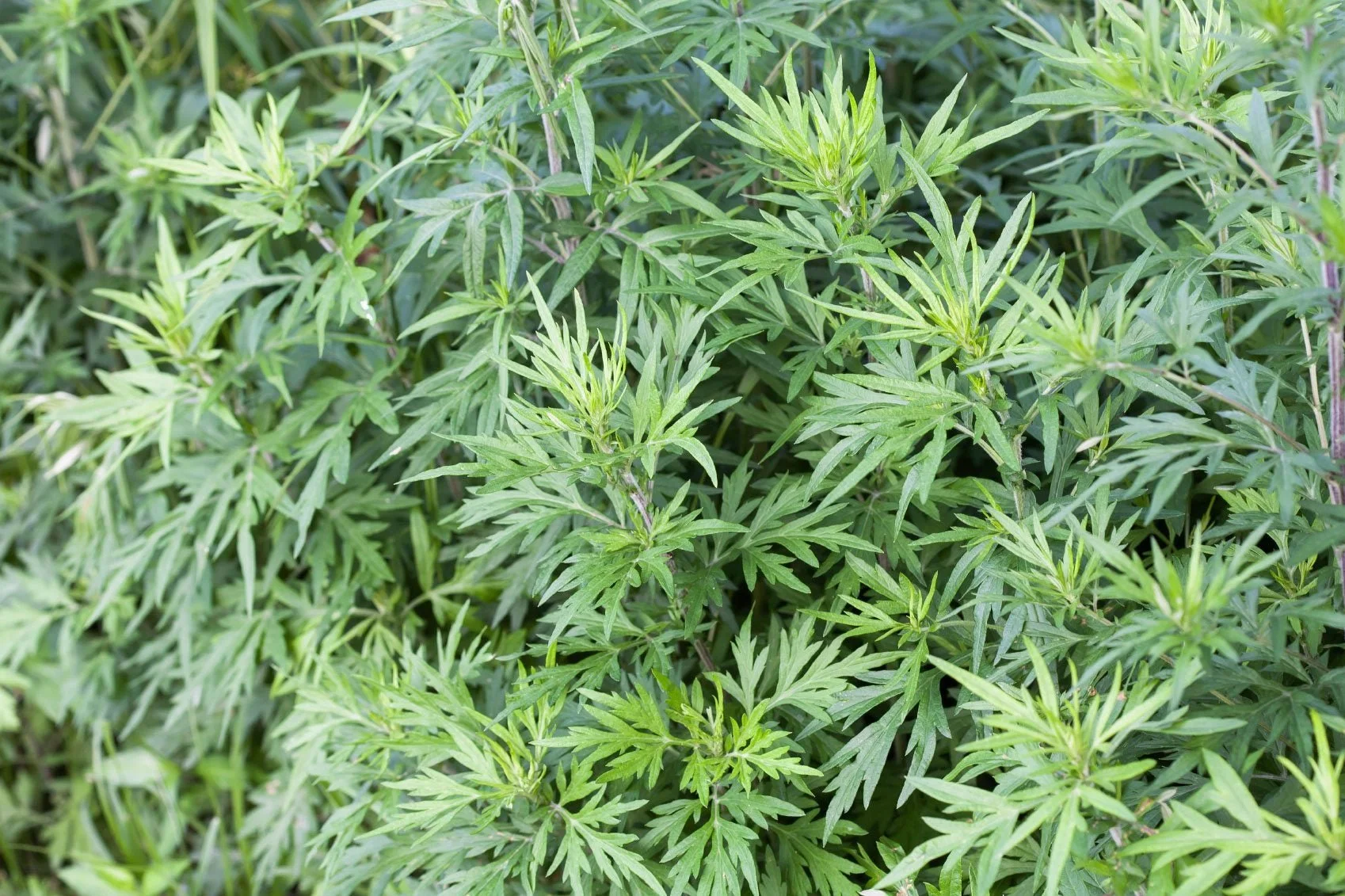
Mugwort has a presence that is felt as much as seen. Tall, aromatic and softly untamed, it grows with an upright confidence along paths, field edges and disturbed ground. Its leaves are deeply lobed and dark green on top, with a pale, silvery underside that catches light when stirred by wind or touch.
When crushed, mugwort releases a strong, bitter, slightly resinous scent that immediately distinguishes it from other roadside plants. Its flowers are small and inconspicuous, forming loose clusters of reddish-brown or yellow-green buds later in the season. Mugwort does not rely on showiness. Its character is rooted in texture, aroma and persistence.
Mugwort typically appears as:
Tall, upright perennial growth
Deeply lobed green leaves with silvery undersides
Strong aromatic, bitter scent when handled
Reddish or yellow-green flower clusters in late summer
Tough, fibrous stems
It is most commonly confused with:
Ragwort, which has bright yellow flowers and very different chemistry
Wormwood, which is more uniformly silvery and intensely bitter
Accurate identification is essential, particularly due to mugwort’s strong effects.
Habitat, Growth & Ecology
Mugwort is native to the UK and widely distributed across Europe. It thrives in disturbed soils and transitional landscapes, including roadsides, waste ground, field margins and riverbanks. It favours nitrogen-rich soil and often appears where land has been worked, abandoned or reshaped.
Ecologically, mugwort is a resilient pioneer species. Its deep roots help stabilise soil, and its presence signals ground in transition rather than long-established ecosystems. Mugwort spreads readily and can form large stands, which has contributed to its long familiarity and accessibility in folk practice.
History, Tradition & Cultural Use
Mugwort has one of the longest and most complex histories of use in European herbal tradition. It was not treated as a gentle daily herb, but as a plant with distinct boundaries and purpose. Historically, mugwort was associated with protection, women’s health, digestion and altered states of awareness.
It appeared widely in folk medicine, monastic texts and domestic practice. Mugwort was used to support digestion after heavy meals, to encourage menstrual flow, and to prepare the body and mind for rest, dreaming and ritual. It was often taken in small amounts, intermittently rather than continuously.
Mugwort was respected rather than indulged. Its use was intentional, timed and deliberate.
Myth, Lore & Symbolism
Mugwort has deep mythic associations across Europe. It was traditionally carried by travellers to ward off fatigue and misfortune, planted near thresholds for protection, and burned or hung indoors during rituals marking seasonal change.
Perhaps most notably, mugwort has long been associated with dreaming and altered perception. It was placed under pillows, used in dream sachets and burned as incense to support vivid dreams and inner vision. These associations reflect cultural relationships with the plant rather than scientific claims, but they remain central to how mugwort has been understood.
Mugwort’s symbolism is tied to liminality - a plant of thresholds, transitions and inner landscapes.
Areas of Scientific Research Interest
Modern scientific interest in mugwort has focused on its volatile oils, bitter compounds and interaction with neurological, digestive and inflammatory pathways. Research often examines mugwort within the broader Artemisia genus, which includes several potent medicinal species.
Mugwort-derived compounds are used in modern herbal and pharmaceutical contexts, though much research remains preclinical. Scientific inquiry tends to focus on isolated constituents rather than whole-plant use, which influences how results should be interpreted.
Nervous System and Sleep Research
Some studies have explored mugwort in relation to nervous system activity, including sedation, stimulation and dream-related effects. Research suggests mugwort compounds may influence neural signalling pathways, though human data is limited and context-dependent.
These findings echo mugwort’s long-standing association with sleep and dreaming, while remaining distinct from traditional experiential use.
Digestive and Bitter Compound Research
Mugwort’s bitter compounds have been studied for their interaction with digestive secretions and gut motility. Research suggests these compounds may support digestive readiness and movement, aligning with traditional use after heavy or stagnant meals.
Nutritional Profile: Vitamins & Minerals
Mugwort is not consumed for nutrition, but it does contain compounds that contribute to its functional character.
Reported constituents include:
Vitamin C - supports immune function and cellular repair
Calcium - supports bone health, muscle contraction and nerve signalling
Potassium - supports fluid balance and normal muscle function
Bitter compounds - stimulate digestive activity and sensory response
Volatile oils - contribute to aroma, nervous system interaction and traditional ritual use
Its value lies primarily in its bitter and aromatic chemistry rather than nutritional density.
Traditional Use vs Modern Research
Traditional use of mugwort was shaped by experience, boundary and respect. It was not taken casually or continuously. People observed that mugwort could sharpen awareness, move stagnation and alter perception, and they used it accordingly.
Modern research reframes these effects through isolated compounds and neurological pathways. While this provides insight into mechanism, it often lacks the contextual framing that governed traditional use, such as timing, dosage and purpose.
Where the two frameworks align is in acknowledging mugwort’s potency. Where they diverge is in application. Traditional practice emphasised moderation and intention, while modern research often examines concentration without context.
Understanding mugwort requires holding its power alongside its limits.
Preparation & Practical Use
Mugwort has always been prepared carefully. Its bitterness and volatile oils respond strongly to preparation method, shaping how and when it is used. Unlike gentle daily herbs, mugwort was traditionally taken in small amounts and often for specific purposes.
Preparation methods aimed to engage its aromatic and bitter qualities without overwhelming the body.
Teas & Infusions
Common preparations include:
Light teas made from small amounts of leaf
Short infusions rather than long decoctions
These preparations are bitter and aromatic, taken sparingly.
External Preparations and Ritual Use
Mugwort has also been used:
In dream sachets placed under pillows
As incense or smoke for ritual contexts
In foot baths or washes
These uses reflect mugwort’s historical role beyond purely physical application.
Sleep & Dreaming Context
Traditionally, mugwort was not used to “knock someone out,” but to accompany the transition into sleep. Small amounts of mugwort tea were sometimes taken in the evening, often blended with gentler herbs, where its bitterness and aroma marked a shift toward rest rather than sedation.
More commonly, mugwort’s relationship with sleep appeared through non-ingestive use, such as:
Sachets placed near the bed
Dried herb under pillows
Aromatic use before sleep
These practices reflect a long-standing distinction between rest and dreaming — with mugwort associated more strongly with the latter.
Ethical Harvesting & Stewardship
Mugwort is abundant and resilient, but ethical harvesting still matters.
Responsible practice includes:
Harvesting aerial parts without disturbing roots
Taking small amounts from large stands
Avoiding contaminated roadside locations
Respecting its role as a pioneer species stabilising disturbed land
Mugwort’s abundance does not justify careless use.
Safety & Considerations
Mugwort is potent and not a casual herb.
Considerations include:
Not suitable for pregnancy due to uterine-stimulating properties
Strong bitterness and volatile oils may irritate sensitive systems
Best used intermittently and intentionally, not daily
Traditional use emphasised respect, timing and restraint.
How We Work With Mugwort at KindRoots
At KindRoots, mugwort is treated as a plant of intention rather than routine. We work with it carefully, respecting its strength and long cultural history.
Mugwort is most often used in small amounts within blends, particularly where digestive bitterness, grounding or sleep support is appropriate. It may also appear in ritual or aromatic preparations rather than daily teas.
Our approach emphasises correct identification, modest quantities and clear purpose. Mugwort is not used casually. It is chosen when its particular character is genuinely needed.
Mugwort is used with care and intention in our own practice and appears occasionally in our preparations.
Closing Note
Mugwort does not ask to be liked. It asks to be listened to. Its bitterness, scent and reputation all serve as signals rather than invitations.
To work with mugwort is to engage with boundaries - between waking and dreaming, movement and stillness, inner and outer worlds. It reminds us that some plants do not comfort. They orient. And sometimes, orientation is exactly what is required.
