
Chamomile ‘Matricaria chamomilla’
Identification & Appearance
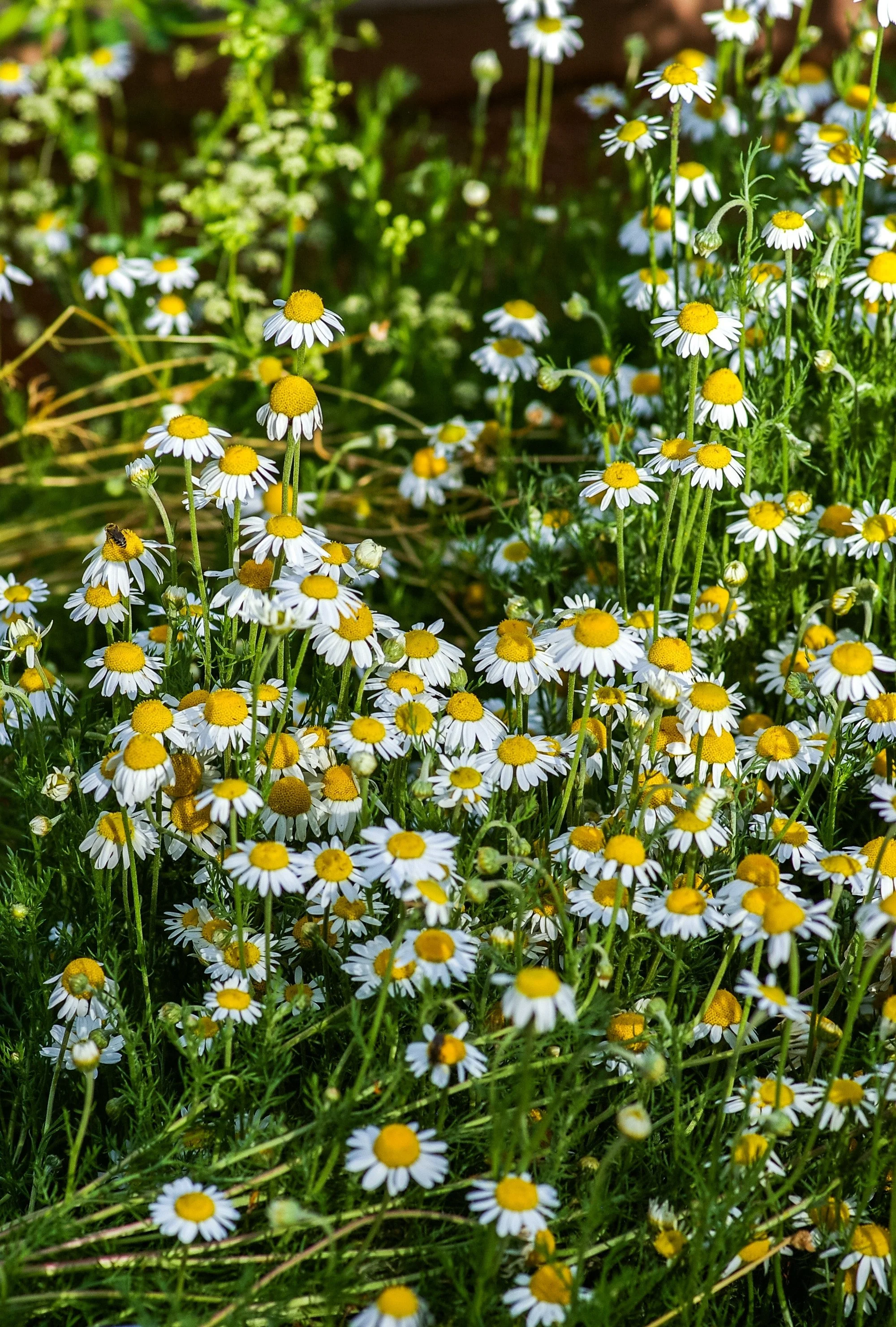
Chamomile is a plant that communicates softness at first glance. Its small, daisy-like flowers sit lightly atop fine, branching stems, their white petals radiating from a bright yellow centre. Despite its delicate appearance, chamomile is resilient and generous, flowering repeatedly across the summer months when harvested regularly.
The flowers are the primary point of interest. When crushed, they release a warm, apple-like scent that is gentle rather than sharp, signalling chamomile’s calming nature. Leaves are finely divided and feathery, contributing to the plant’s airy appearance. Chamomile often appears scattered rather than dominant, weaving itself through gardens, field margins and cultivated beds.
Chamomile typically appears as:
Small daisy-like flowers with white petals and yellow centres
Hollow, conical flower heads (in German chamomile)
Finely divided, feathery leaves
Slender, branching stems
Soft, apple-like aroma when handled
It is most commonly confused with:
Scentless mayweed, which lacks aroma
Other wild daisies without hollow flower centres
Scent and flower structure are the most reliable identifiers.
Habitat, Growth & Ecology
Chamomile is not native to the UK but has been cultivated and naturalised for centuries. German chamomile (Matricaria chamomilla) is most commonly grown for herbal use, while Roman chamomile (Chamaemelum nobile) is often cultivated as groundcover.
Chamomile thrives in open, sunny locations with well-drained soil. It readily self-seeds and responds well to regular harvesting, often producing more flowers when picked consistently.
Ecologically, chamomile supports pollinators and contributes to plant diversity in cultivated landscapes. Its relationship with humans has shaped its distribution more than wild competition.
History, Tradition & Cultural Use
Chamomile has one of the longest continuous histories of use in European herbal tradition. It was valued as a calming, harmonising plant, used where the body or mind felt unsettled rather than broken.
Historically, chamomile appeared in teas, baths, compresses and oils. It was used to ease digestive discomfort, calm nervous tension, support sleep and soothe irritated skin. Chamomile was a household staple rather than a specialist remedy, relied upon for its predictability and gentleness.
Its role was not to force change, but to make rest and recovery easier to access.
Myth, Lore & Symbolism
Chamomile has long been associated with humility and quiet strength. In folk tradition, it was believed that chamomile benefited from being walked upon, growing more vigorously when trodden. This idea reflected its resilience and its ability to thrive under pressure.
Symbolically, chamomile represents patience and softness as forms of strength. It was often planted near homes as a calming presence, reinforcing its association with rest, comfort and protection.
Areas of Scientific Research Interest
Modern scientific research into chamomile has focused on its interaction with nervous, digestive and inflammatory pathways. Studies often examine chamomile extracts, essential oils and isolated compounds such as apigenin.
Chamomile is widely used in modern herbal, cosmetic and pharmaceutical preparations, reflecting a strong continuity between traditional use and contemporary application.
Nervous System and Sleep Research
Research suggests chamomile contains compounds that:
Interact with neurotransmitter receptors involved in relaxation
Support sleep onset and sleep quality
Contribute to mild anxiolytic effects
These findings align closely with traditional use for rest and nervous settling.
Digestive and Anti-inflammatory Research
Studies have examined chamomile’s role in:
Soothing gastrointestinal irritation
Supporting smooth muscle relaxation
Modulating inflammatory pathways
This helps explain its historical use for digestive discomfort and cramping.
Nutritional Profile: Vitamins & Minerals
Chamomile is not consumed for nutrition in bulk, but it contains compounds that support overall function.
Reported constituents include:
Vitamin A (carotenoids) - supports skin and mucous membrane health
Calcium - supports bone health and muscle function
Magnesium - supports nervous system regulation and relaxation
Potassium - supports fluid balance and muscle activity
Flavonoids (including apigenin) - contribute to antioxidant and calming activity
Volatile oils - support aroma, sensory effects and traditional use
Chamomile’s value lies primarily in its gentle functional chemistry rather than nutritional density.
Traditional Use vs Modern Research
Traditional use of chamomile was shaped by comfort and familiarity. It was given to children, elders and those in recovery because it was considered safe, predictable and supportive. Effects were judged by felt experience rather than explanation: sleep came easier, digestion settled, irritation softened.
Modern research isolates chamomile’s compounds and examines their interaction with nervous and inflammatory systems. While this offers valuable insight, it can overstate precision. Traditional use relied on whole-plant preparations, low intensity and repeated use.
Where both frameworks align is in chamomile’s suitability for gentle, consistent support. Where they differ is in expectations of outcome. Chamomile was never meant to act forcefully.
Preparation & Practical Use
Chamomile has always been prepared with care for its volatile oils. Excessive heat or prolonged extraction diminishes its character, shaping preparation methods that prioritise lightness and aroma.
Historically, chamomile was used often and in small amounts, integrated into daily routines rather than reserved for crisis.
Teas & Infusions
The most common preparation includes:
Light infusions made with hot, not boiling, water
Short steep times to preserve aroma and flavour
These teas are calming, gently bitter and lightly floral.
External Preparations
Chamomile has also been used in:
Baths for relaxation
Compresses for irritated skin
Infused oils for topical preparations
External use reflects chamomile’s soothing relationship with both skin and nervous system.
Ethical Harvesting & Stewardship
Chamomile is a cultivated plant, and ethical use focuses on sustainable growing and harvesting practices.
Responsible practice includes:
Harvesting flowers regularly to encourage continued blooming
Leaving sufficient flowers for pollinators
Avoiding chemical treatments
Harvesting during dry weather to preserve quality
Stewardship here is about care and continuity rather than scarcity.
Safety & Considerations
Chamomile is widely regarded as gentle, but awareness is still important.
Considerations include:
Potential sensitivity in individuals allergic to plants in the daisy family
Moderation in concentrated forms
Differences between German and Roman chamomile preparations
Traditional use relied on light preparations and familiarity rather than high-dose extracts.
How We Work With Chamomile at KindRoots
At KindRoots, chamomile is treated as a foundational calming herb.
We work with chamomile primarily in teas and gentle topical preparations, particularly where nervous settling, digestive comfort or skin soothing is needed. It is valued for its reliability and its ability to support rest without dulling awareness.
Our approach prioritises whole flowers, careful drying and simple preparation, allowing chamomile to offer the kind of steady support it has always been known for.
Chamomile is used regularly in our own practice and appears in a number of our preparations intended for gentle, everyday use.
Closing Note
Chamomile teaches that rest is not a luxury but a condition for healing. It does not demand attention or effort. It simply makes space.
To work with chamomile is to accept that some forms of care arrive quietly, easing the body back toward balance rather than pushing it forward. Its strength lies in gentleness, and its value lies in how often it can be returned to without consequence.
