
Hawthorn Blossom ‘Crataegus monogyna’
Identification & Appearance
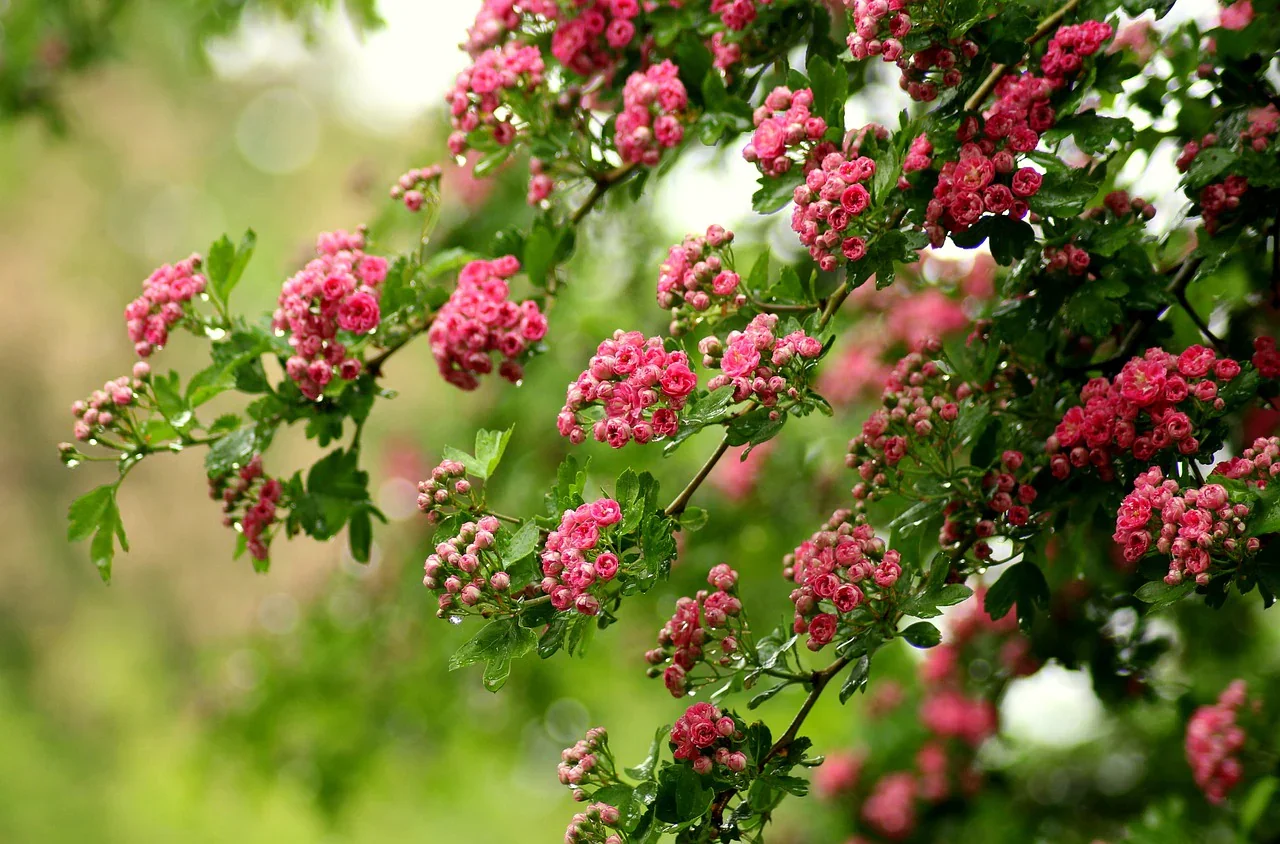
Hawthorn blossom marks a clear turning point in the year. When the hedgerows erupt into clouds of white and pale pink flowers, spring gives way to early summer. The blossoms appear in dense clusters, each individual flower small and simple, with five rounded petals surrounding prominent pink-red stamens.
The scent of hawthorn blossom is distinctive and divisive. It is often described as musky, earthy or slightly sweet, carrying an edge that feels alive rather than decorative. This scent signals the flower’s chemistry and pollinator appeal rather than human preference. The blossoms emerge alongside young, tender leaves, both of which have been traditionally gathered together.
Hawthorn blossom is fleeting. Its brief appearance contributes to both its cultural importance and the care required when harvesting.
Hawthorn blossom typically appears as:
Dense clusters of small white or pale pink flowers
Five rounded petals per flower
Prominent pink or red stamens
A strong, musky-sweet scent
Young green leaves emerging simultaneously
It is most commonly confused with:
Blackthorn blossom, which flowers earlier and appears before leaves
Apple or cherry blossom, which have larger flowers and different leaf structure
Correct identification is essential, particularly in mixed hedgerows.
Habitat, Growth & Ecology
Hawthorn is native to the UK and widespread across Europe. It thrives in hedgerows, woodland edges, pasture margins and scrubland, tolerating a wide range of soils and conditions.
Ecologically, hawthorn is a keystone species. Its blossom provides an early and vital nectar source for pollinators, while its dense structure offers shelter and nesting habitat for birds. Later in the year, its berries support wildlife through autumn and winter.
The blossom stage represents a moment of peak vitality, before the tree shifts energy toward fruit production.
History, Tradition & Cultural Use
Hawthorn has a deep and complex history in European tradition, both medicinal and symbolic. Hawthorn blossom and leaf were historically associated with the heart, understood in both physical and emotional terms.
In traditional Western herbalism, hawthorn was used gently and over long periods. Blossom and leaf were prepared as teas or tinctures and taken daily rather than acutely. It was valued for steadiness rather than speed, supporting balance rather than forcing change.
Hawthorn appeared frequently in monastic medicine, folk practice and early pharmacopoeias, earning a reputation as a plant of patience and trust.
Myth, Lore & Symbolism
Hawthorn occupies a powerful place in European folklore. Often associated with May Day and seasonal transition, it has long been seen as a liminal tree, standing at boundaries between fields, paths and woodland.
Traditionally, hawthorn was both revered and treated with caution. Cutting or bringing blossom indoors was sometimes discouraged, reflecting its association with thresholds and change. Symbolically, hawthorn represents the heart not as sentiment, but as a centre of rhythm, balance and continuity.
These meanings arose from lived relationship rather than story alone.
Areas of Scientific Research Interest
Hawthorn is one of the most extensively researched plants in Western herbal medicine, particularly in relation to cardiovascular health. Modern research builds upon centuries of traditional use rather than replacing it.
Hawthorn leaf and flower preparations are recognised in official herbal monographs, including those by the European Medicines Agency and Commission E.
Cardiovascular Support Research
Clinical and observational studies suggest hawthorn preparations may:
Support cardiac output and efficiency
Influence coronary blood flow
Support exercise tolerance in mild heart failure
Contribute to overall circulatory balance
These studies typically focus on consistent, long-term use rather than acute dosing.
Blood Pressure and Circulatory Research
Research has also explored hawthorn’s interaction with vascular tone and peripheral circulation. Findings suggest supportive effects in mild cases, though results vary depending on preparation and dosage.
Nutritional Profile: Vitamins & Minerals
Hawthorn blossom and leaf are not used for nutrition, but they contain compounds that support cardiovascular and tissue health.
Reported constituents include:
Flavonoids - support antioxidant activity and vascular integrity
Oligomeric procyanidins - support circulatory function and tissue resilience
Vitamin C (trace) - supports connective tissue and cellular protection
Potassium - supports normal heart rhythm and muscle function
Polyphenols - contribute to antioxidant and inflammatory research interest
Their value lies in functional chemistry rather than nutritional density.
Traditional Use vs Modern Research
Traditional use of hawthorn emphasised time and relationship. It was taken daily, sometimes for months or years, with effects understood gradually rather than immediately. People observed steadier pulse, improved endurance and emotional settling.
Modern research mirrors this emphasis on consistency. Clinical studies highlight cumulative effects and note that benefits often diminish when use stops. This alignment between tradition and research is unusually strong.
Where the frameworks differ is in context. Traditional use considered the whole person, including emotional rhythm, while modern research focuses on measurable cardiovascular parameters.
Understanding hawthorn requires holding both views without reducing one to the other.
Preparation & Practical Use
Hawthorn has always been prepared with restraint and regularity. Its chemistry responds best to gentle, repeated exposure rather than high doses.
Preparation methods reflect its long-term role.
Teas & Infusions
Traditional preparations include:
Daily teas made from blossom and young leaf
Light infusions rather than decoctions
These teas are mild, slightly floral and gently astringent.
Tinctures & Extracts
Hawthorn is commonly prepared as a tincture to support consistent daily use. Many modern preparations are standardised, reflecting clinical research practices.
Ethical Harvesting & Stewardship
Hawthorn blossom harvesting requires particular care due to its ecological importance.
Responsible practice includes:
Taking very small amounts from any one tree
Avoiding harvesting in poor flowering years
Leaving the majority of blossom intact for pollinators
Harvesting away from polluted roadsides
Overharvesting blossom directly impacts fruit and wildlife later in the year.
Safety & Considerations
Hawthorn is generally safe, but context matters.
Considerations include:
Caution when used alongside heart medications
Professional guidance for diagnosed cardiac conditions
Expectation of gradual effects rather than immediate change
Traditional use relied on patience and continuity.
How We Work With Hawthorn Blossom at KindRoots
At KindRoots, hawthorn blossom is treated as a long-term, relationship-based plant.
We work with hawthorn blossom primarily in gentle teas and tinctures, often combined with leaf, where its steady cardiovascular support can unfold over time. It is chosen for reliability and suitability for daily use rather than intensity.
Our approach prioritises careful harvesting, appropriate dosage and long-term consistency, reflecting both traditional practice and modern research.
Hawthorn blossom is used gently and over longer periods in our own practice and appears occasionally in our preparations.
Closing Note
Hawthorn does not hurry the heart. It listens to it.
To work with hawthorn blossom is to accept that strength grows through rhythm, not force. It reminds us that balance is not achieved by correction alone, but by steady support applied patiently, allowing the heart to find its own pace again.
